


Windows Media Player is a long-standing Windows tool that many people have used for years, mainly for managing and playing local music files. At the same time, Spotify is widely used because of its large music catalog and convenience, supported by an official Windows app for Windows 10 (64-bit), Windows 11, and newer systems. The Spotify app makes it easy to discover songs, build playlists, and access a huge music library instantly. It also offers a clean interface and a Web Player option, which fits the way most people listen to music today.
Still, neither option fully replaces the other. Windows Media Player focuses on local files, while Spotify tracks are not standard audio files. Even offline downloads stay inside the Spotify app and cannot be used in Windows Media Player because they are stored in a DRM-protected format.
So the gap is clear. Windows Media Player only supports formats like MP3 or WAV, which means Spotify tracks cannot be added directly. To solve this, tools like ViWizard Spotify Music Converter can convert Spotify music into standard audio files on a Windows computer. Once converted, the files can be added to Windows Media Player and used like normal local music, including the option to burn them to CD.
Part 1. Can I Play Spotify on Windows Media Player?
Spotify tracks cannot be used directly in Windows Media Player because they are protected streaming files. The first step is to convert them into standard audio formats that your system can read.
ViWizard Spotify Music Converter can handle this by exporting songs, playlists, albums, podcasts, and even audiobooks (if available) into formats such as MP3 or WAV, which work well with Windows Media Player. MP3 is the best choice for compatibility, while WAV is better if you want lossless quality. For more control, you can also adjust bit rate, sample rate, and channels to get the output quality you prefer.
To do this, install the Windows version of the converter and log in to load your Spotify library. Then click the “Add” button to select the music you want. Before converting, open the settings and choose MP3 or WAV as the output format. Once everything is ready, click “Convert”, and the files will be saved locally on your computer, usually in a default music folder unless you change it. You can also go to Preferences > Conversion to set the output folder and naming rules, which helps keep your Spotify library more organized.

Key Features of ViWizard Spotify Music Converter
Free Trial Free Trial* Security verified. 5, 481,347 people have downloaded it.
- Convert Spotify songs, playlists, albums, podcasts, and audiobooks
- Export Spotify music in 6 formats for different devices and players
- Support Spotify Premium and free accounts for music conversion
- Preserve music metadata when organizing converted collections
- Batch download Spotify playlists and large music libraries
Step 1Add Spotify Music for Conversion

Start by installing ViWizard Spotify Music Converter on your Windows computer. Once installed, open the program and sign in to your Spotify account so your library can be accessed. The built in player lets you browse and search for songs, albums, or playlists directly inside the program, so there is no need to switch between apps while preparing your music for Windows Media Player.
Step 2Add Spotify Music for Conversion

After logging in, find the songs or playlists you want to use in Windows Media Player. You can search within the app or paste a Spotify link if you already have one. Click the add button to load the selected tracks into the conversion list. You can choose a few songs or include full playlists depending on how much music you want to convert.
Step 3Choose MP3 for Windows Media Player Compatibility

Next, open the settings or preferences panel and set MP3 as the output format. MP3 works best with Windows Media Player and most other devices, making it the safest choice. You can also adjust audio settings like bit rate or sample rate if needed, and organize output files by artist or album to keep your library easy to manage later.
Step 4Convert and Save Your Spotify Music

Once everything is set, click the convert button to begin. The program will process your selected tracks and save them as MP3 files on your computer. After the conversion finishes, open the output folder to find your music. These files can now be added to Windows Media Player and played like any other local tracks without relying on the Spotify app.
Part 2. Add Spotify Local Files to Windows Media Player
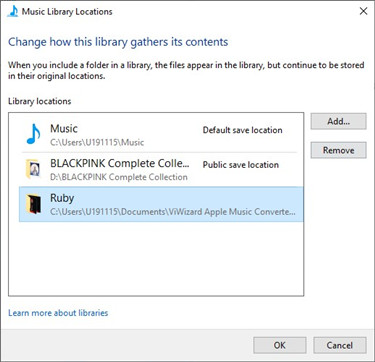
Once your Spotify tracks are converted, open Windows Media Player and go to Organize, then Manage libraries, and select Music. Click Add and choose the folder where your converted files are stored. Confirm your selection and the program will scan the folder and import the music into your library. If the tracks do not appear right away, selecting Music in the left panel will usually refresh the view and load everything properly.
Step 1 Open Windows Media Player on your computer. You can type “Windows Media Player” into the search bar and launch it from there.
Step 2 Click Organize in the top-left corner, then go to Manage libraries > Music.

Step 3 In the Music Library Locations window, click Add.

Step 4 Browse to the folder where your converted Spotify music files are stored.
Step 5 Select the folder and click Include folder, then click OK to confirm.
Step 6 Wait while Windows Media Player scans the folder and adds your music to the library.
Part 3. Play Spotify Local Files in Windows Media Player
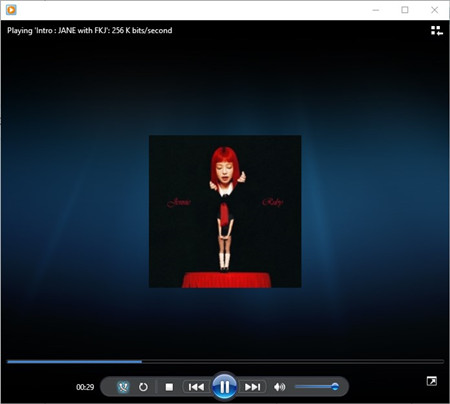
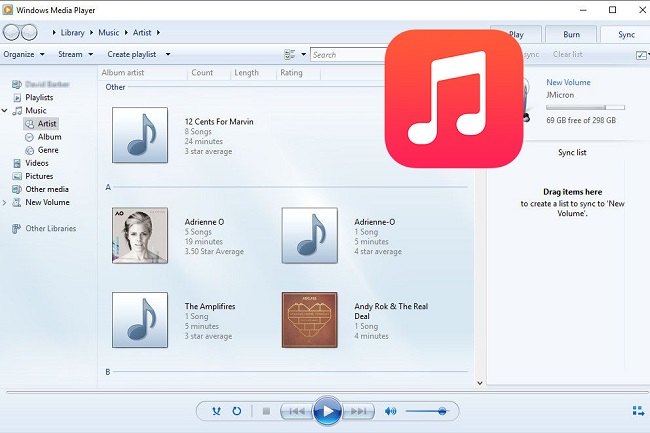
After the music is added, you can browse it in the “Music” section by artist, album, or song and double-click any track to start playback. The bottom bar provides basic controls like play, pause, skip, and shuffle, while switching to “Now Playing” unlocks additional options such as equalizer settings and visualizations through the right-click menu. You can also enable the mini player if you prefer a smaller window while working on other tasks.
Step 1 Open Windows Media Player and switch to the Library view if needed.
Step 2 Click Music in the left sidebar to access your library.
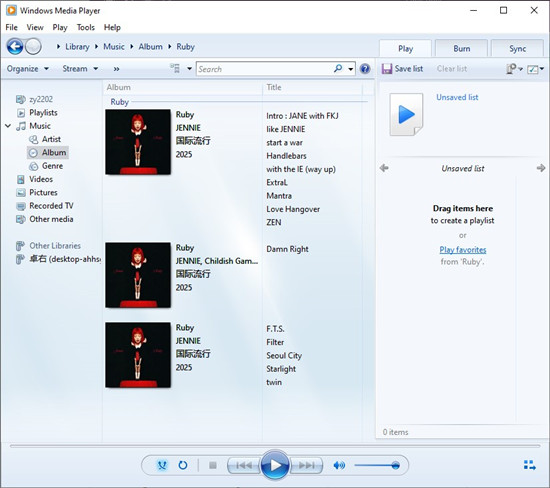
Step 3 Browse your tracks by Artist, Album, or use the search box in the top-right corner.
Step 4 Double-click any song to start playing it, or right-click a track and select Play.
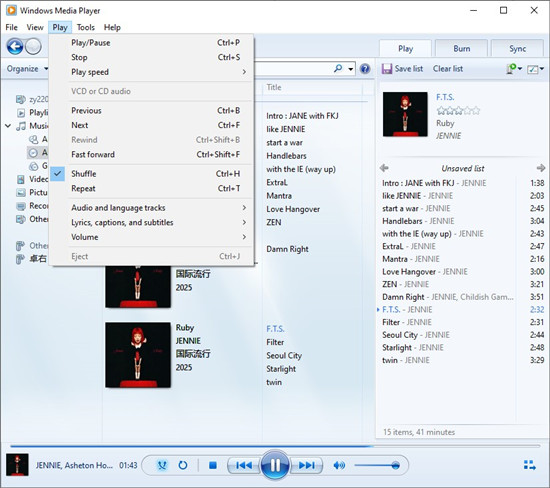
Step 5 To play multiple songs, select them and click Play, or drag them into the Play pane to create a playlist.
Part 4. Burn Spotify Music to CD in Windows Media Player
To burn your Spotify music to CD, open the “Burn” tab in Windows Media Player and drag songs or playlists into the burn list area. Insert a blank CD, and the program will detect it automatically. Click “Start burn” to begin writing the files to disc, and once completed, the CD can be played on most standard CD players as long as the music was converted into a supported format like MP3 or WAV.
Step 1 Open Windows Media Player and go to the Library view.
Step 2 Insert a blank CD-R or CD-RW into your computer's disc drive.
Step 3 Click the Burn tab on the right side of the window.
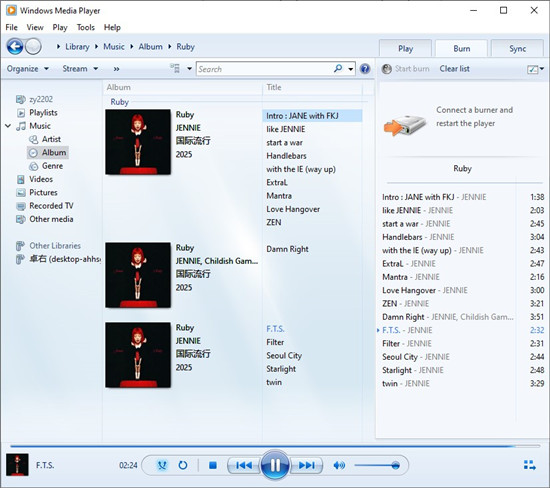
Step 4 Drag and drop your Spotify music files into the Burn List pane.
Step 5 Arrange the tracks in your preferred order by dragging them up or down.
Step 6 Click Burn options and choose Audio CD if you want the disc to work on standard CD players.
Step 7 Click Start burn to begin the process, then wait for Windows Media Player to finish burning the disc.
Extra Tips: Windows Media Player Tips and Tricks for Spotify Music
Windows Media Player is rarely chosen for new setups today, but it remains in use because many users already have established libraries inside it. It works best as a simple offline tool for managing existing music collections rather than a modern streaming or discovery platform like Spotify.
How to organize your music library in Windows Media Player
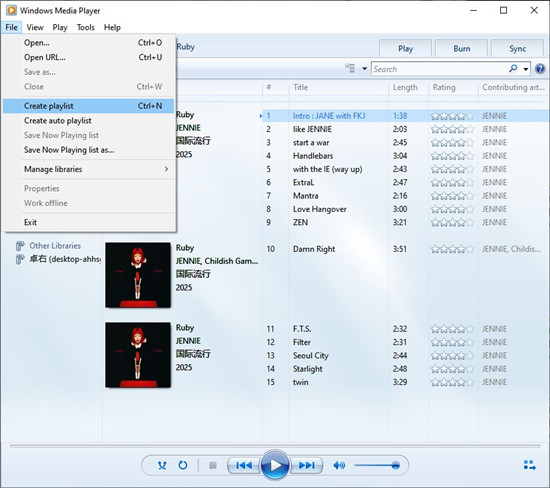
Users can organize their local collections in a way that feels similar to a Spotify library. Windows Media Player focuses on local files, but the goal is the same, keeping music easy to browse and play. Import your folders into the library and let WMP sort them by artist, album, and genre. You can right-click tracks to edit details like artist or album, which helps clean up converted Spotify files. You can also sort from the top menu and create playlists by dragging songs into the playlist area, keeping a structure similar to Spotify.
How to fix missing or incorrect music info
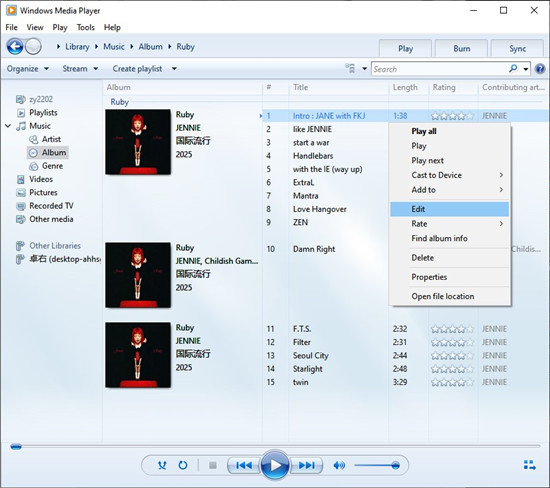
Some music may not appear correctly at first, with wrong album names, missing artwork, or mismatched tracks. To fix this, right-click an album or song and choose the option to find or edit album information. You can update details manually or let WMP search online, although users often still need to correct tags themselves when results are not accurate.
How to rip CDs into your music library
Windows Media Player can convert CDs into digital files by inserting a disc and letting WMP detect it. Before ripping, choose your format and quality settings, with MP3 commonly used for compatibility. After ripping, it is often necessary to review tracks and fix metadata so everything stays consistent with your library.
How to use Windows Media Player for background listening
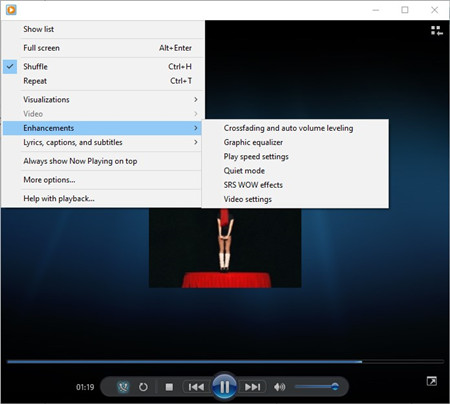
Many users use Windows Media Player as a simple background music player by opening a playlist and letting it run while working or studying. It works offline, requires no accounts, and focuses only on local files, making it a lightweight alternative to streaming.
How to improve playback and fix issues
If playback becomes unstable or the library feels disorganized, a few quick fixes can help. Crossfading and volume leveling improve transitions and balance audio, while rebuilding the media library can refresh the index and reduce duplicates.
How to understand when to use it
Windows Media Player is not usually chosen for new setups, but it remains useful for users who already have a library set up. It works best as a simple offline tool for managing and playing existing music collections.
Conclusion
If you are looking for a way to help you put Spotify music on Windows Media Player for playing, you can try using ViWizard Spotify Music Converter. Since then, you can download and convert Spotify music to MP3 for playing anywhere without limits. Now start your listening of Spotify music on Windows Media Player.
You May Be Interested




Adam Gorden is always looking for new ways to explore music and videos. He likes trying different media tools and learning how to manage audio and video files with ease.

Leave a Comment (0)