


Apple Music gives access to millions of songs, but Apple Music subscription downloads are protected and cannot be converted directly to MP3 with standard audio converters. This differs from iTunes Store purchases. DRM-free iTunes Plus songs can be converted to MP3 through iTunes or the Apple Music app's built-in conversion settings, but you need to own the purchased tracks first.
So, can you convert Apple Music to MP3? Yes for purchased tracks, but not directly through Apple for Apple Music subscription songs. Purchased iTunes Plus songs can be converted with Apple's built-in tools, while Apple Music subscription songs require an alternative approach, such as desktop Apple Music converters, online Apple Music downloaders, or audio recording software.
In this guide, we will explore different methods for converting Apple Music to MP3, including example tools such as ViWizard Apple Music Converter. Let's get started.

Need Apple Music in more flexible audio formats? ViWizard Apple Music Converter helps Apple Music subscribers create a personal music library with seamless music backup. Build your collection and keep your music beyond the Apple Music app.
Part 1. Can You Convert Apple Music to MP3?
Yes, Apple Music can be converted to MP3, but the method depends on the music source. Apple Music subscription downloads and iTunes Store purchases work differently. DRM-free iTunes Plus purchases can be converted with Apple's built-in tools, while Apple Music subscribers usually need dedicated conversion or recording solutions.
1.1Can You Convert Protected Apple Music Songs to MP3?
Apple Music subscription downloads are protected audio files designed for offline listening within the Apple Music app, not standard MP3 files. Although users can download songs, FairPlay DRM prevents them from being converted directly with regular audio converters. To create MP3 files from Apple Music, users need dedicated Apple Music converter software, open-source tools, online converters, or audio recording software.
1.2Can You Convert iTunes Store Purchases to MP3?
iTunes Store purchases differ from Apple Music subscription tracks. Apple states that "you can convert iTunes Store purchases only if they're iTunes Plus songs." iTunes Plus songs are DRM-free AAC files, so eligible purchases can be converted to MP3 through iTunes or the Music app.
In short, Apple's built-in conversion options work for eligible DRM-free iTunes purchases, while protected Apple Music subscription downloads require a different approach.
Part 2. How to Convert Apple Music to MP3 with a Desktop Converter
For Apple Music subscription content, a desktop converter provides a direct conversion workflow without real-time recording. ViWizard Apple Music Converter can convert Apple Music tracks, albums, and playlists into MP3 and other common audio formats. The workflow is to install it on Windows or Mac, access Apple Music content through the built-in Apple Music Web Player, select MP3 as the output format, adjust the audio settings if needed, and start the conversion.
How to Convert Apple Music to MP3 Using ViWizard Apple Music Converter
ViWizard supports MP3, WAV, FLAC, AIFF, M4A, and M4B output, with MP3 available at up to 320 Kbps. You can select individual songs, albums, or playlists for batch conversion, while available metadata, album art, and lyrics are preserved. This method is suited to users who want to convert Apple Music content into local audio files without recording playback in real time. You can choose the content to convert, customize the output settings, and save the resulting files to a local folder.
Key Features of ViWizard Apple Music Converter
Free Trial Free Trial* Security verified. 5, 481,347 people have downloaded it.
- Convert Apple Music songs, playlists, albums, and artists
- Export Apple Music in 6 formats for different devices and players
- Preserve metadata and lyrics when creating music collections
- Organize converted music by artist and album
- Batch download large Apple Music collections
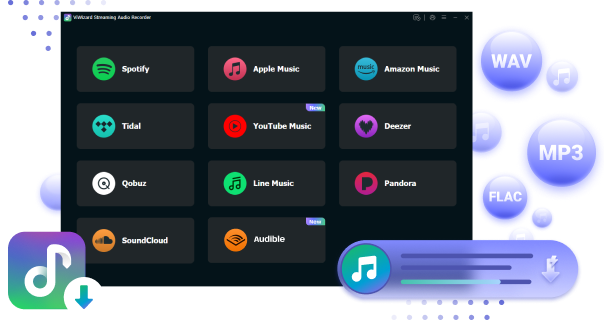
01Download and install ViWizard Apple Music Converter on your Windows or Mac computer.
02Open ViWizard Apple Music Converter.

03Sign in with your Apple Music account through the built-in Apple Music Web Player.
04Browse your Apple Music library and select the songs, albums, or playlists you want to convert.

05Click Add Music to load the selected content into the conversion list.

06Click the Format button at the bottom of the interface.

07Select MP3 as the output format.
08Adjust settings such as bitrate, sample rate, bit depth, channel, and output folder if needed.
09Click Convert to start converting Apple Music to MP3.

10Click the Converted tab to locate your converted MP3 files.

- Direct Apple Music conversion workflow for songs, albums, and playlists
- Flexible MP3 output settings, including bitrate, sample rate, and other audio options
- Supports batch conversion and music library management features
- Usually preserves metadata such as song titles, artists, albums, and artwork
- Suitable for users who need regular and consistent conversions
- Full features and unlimited conversion usually require paid software
- Requires installing desktop software before use
- May require Apple Music account access within the application
- Features and output options vary between different converters
Part 3. How to Download Apple Music Songs as MP3 with an Online Downloader
For occasional downloads without installing desktop software, an online downloader provides a browser-based way to download Apple Music songs as MP3. AAPLMusicDownloader can process Apple Music links and provide audio files for download. The workflow is to open the online tool, paste an Apple Music link, submit it for processing, select an available MP3 option, and download the resulting file.
How to Download Apple Music as MP3 Using AAPLMusicDownloader
AAPLMusicDownloader works through a web browser, so you do not need to install a desktop application. After submitting an Apple Music song link, you can choose from the available download options. This method is convenient for occasional downloads, but online tools may offer fewer output settings and less control than desktop converters. Their availability and supported options may also vary.
01Open the Apple Music app or Apple Music Web Player.
02Find the song, album, or playlist you want to process.
03Tap the three-dot menu next to the item.
04Select Share.
05Select Copy Link.
06Open the AAPLMusicDownloader website in your browser.
07Paste the Apple Music link into the input box.
08Click Download.
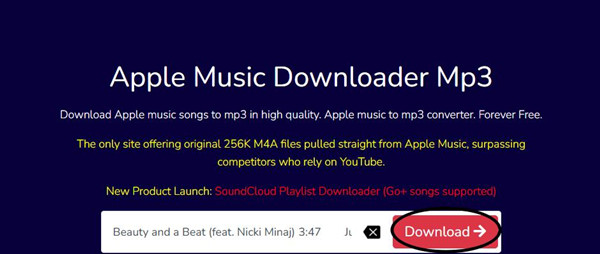
09Wait for the service to analyze the link.
10Click Generate Download Link.

11Select the available output format or bitrate option.
12Save the downloaded audio file to your device.
Read More: AAPLMusicDownloader Review & Guide
- No software installation required
- Works directly through a web browser
- Simple workflow by submitting supported Apple Music links
- Suitable for occasional conversions and quick access
- Output quality, formats, and features may vary between services
- Provides less control over audio settings than desktop software
- Availability and reliability may change over time
- Some tools may have download limits, advertisements, or unclear service stability
Part 4. How to Record Apple Music Songs as MP3 with Audio Recording Software
When real-time recording is the preferred approach, audio recording software provides another way to save Apple Music playback as MP3. Audacity can record audio from a computer and export the recording as MP3 or another supported format. The workflow is to configure an audio recording source, play the Apple Music track, record the playback, and export the recording as MP3.
How to Record Apple Music as MP3 Using Audacity
Audacity is a free, open-source audio recording and editing application available for Windows, macOS, and Linux. It is not an Apple Music converter. Instead, it records audio playback from a configured recording source and lets you export the recording in a supported format. To record Apple Music, configure a suitable audio source, play the desired content, and start recording. After playback finishes, you can edit the recording if needed and export it as MP3. Supported export formats include MP3, WAV, Ogg Vorbis, and FLAC, depending on the system and Audacity version.
Because Audacity records audio in real time rather than directly converting Apple Music content, recording takes approximately as long as playback. This method can work for occasional recordings, but longer tracks or large music collections require more manual effort.
01Download and install Audacity on your computer.
02Open Audacity.
03Select the system audio recording source, such as Windows WASAPI or Loopback.
04Open Apple Music and prepare the song or playlist you want to record.
05Click the red Record button in Audacity.
06Play the Apple Music track.
07Wait for Audacity to record the audio playback.
08Click Stop after the recording finishes.
09Review the recording in the Audacity editor.
10Select File > Export Audio.
11Choose MP3 as the output format.
12Save the recorded file to your computer.
- Provides a free or low-cost way to capture Apple Music playback
- Works with different audio sources beyond Apple Music
- Includes editing features such as trimming and audio processing
- Supports exporting recordings into formats such as MP3, WAV, and FLAC
- Records audio in real time, so longer tracks require longer recording time
- Requires manual setup of audio sources and recording settings
- Output quality depends on the recording configuration
- Usually does not preserve metadata or support batch conversion
Part 5. How to Convert iTunes Store Purchases to MP3 with iTunes / Apple Music App
For iTunes Plus purchases, which are DRM-free, you can use Apple's built-in music conversion features to create MP3 versions. iTunes and the Apple Music app support formats such as AAC, AIFF, Apple Lossless, MP3, and WAV for audio conversion.
How to Convert iTunes Store Purchases to MP3 Using iTunes or the Apple Music App
iTunes includes a built-in audio conversion function that lets you create copies of songs in different formats through its import settings. To create an MP3 version, choose MP3 as the encoding format and create a new version of the compatible song.
On newer Mac systems, the Apple Music app provides the corresponding music management and conversion features. The exact menu names and settings may differ between iTunes on Windows and the Apple Music app on Mac.
01Open iTunes on your computer.
02Add your purchased songs or supported audio files to the iTunes library.
03Open Edit > Preferences on Windows or iTunes > Preferences on Mac.
04Select the General tab.
05Click Import Settings.

06Select MP3 Encoder under Import Using.

07Click OK to save the settings.
08Select the songs you want to convert.
09Go to File > Convert.
10Select Create MP3 Version.

11Find the converted MP3 files next to the original songs.
- Uses Apple's built-in conversion feature without additional software
- Supports formats including MP3, AAC, AIFF, Apple Lossless, and WAV
- Provides a simple workflow for compatible iTunes Store purchases
- Suitable for users who already manage purchased music through iTunes
- Only works with compatible iTunes Store purchases, such as iTunes Plus songs
- Does not convert Apple Music streaming catalog content
- Offers fewer customization options than dedicated converter software
- Not suitable for converting Apple Music libraries or playlists
Part 6. How to Customize Apple Music MP3 Output
When converting Apple Music to MP3, you can customize the output to balance audio quality, file size, and file organization. The main settings to consider are the MP3 bitrate, metadata and album artwork, and the output folder.
-

Choose the MP3 Bitrate
The MP3 bitrate determines how much audio data is stored in each second of the file. Common options include 128 Kbps, 192 Kbps, 256 Kbps, and 320 Kbps.
For Apple Music conversion, choose a bitrate based on how you plan to use the files. A lower bitrate can reduce file size, while a higher bitrate can preserve more audio detail. ViWizard Apple Music Converter supports MP3 output from 64 Kbps to 320 Kbps, giving you more control over the balance between audio quality and file size. -
Check Metadata and Album Artwork
Metadata helps identify converted tracks in a local music library. Common fields include song title, artist, album, and track number. Album artwork can also make files easier to recognize in compatible music players.
Some conversion tools can preserve available metadata and artwork during conversion. ViWizard can preserve available metadata, album artwork, and lyrics when converting Apple Music content, so the resulting MP3 files can retain information from the original tracks. -
Choose an Output Folder
The output folder determines where the converted MP3 files are saved after conversion. Choosing a dedicated folder can make the files easier to locate.
Most desktop converters let you select the output location before starting a conversion. With ViWizard Apple Music Converter, you can choose the destination folder for the converted files and access the MP3s from that location after conversion.
Part 7. What Is the Best Way to Convert Apple Music to MP3?
The best method depends on the type of Apple Music content you want to convert and how you plan to use the resulting MP3 files. Desktop converters, online downloaders, and audio recording software each use a different approach, while iTunes and the Apple Music app can convert compatible DRM-free iTunes Store purchases.
| Method | How It Works | Advantages | Limitations | Best For |
|---|---|---|---|---|
| Desktop Apple Music Converter | Uses desktop software to access Apple Music content and convert selected songs, albums, or playlists to MP3. | Direct conversion workflow, batch conversion, multiple output formats, customizable settings. | Requires software installation and an active Apple Music account. | Users who want to convert Apple Music content regularly or in batches. |
| Online Apple Music Downloader | Processes Apple Music links through a web-based interface and provides downloadable audio files. | No desktop software installation and a simple browser-based workflow. | Fewer output options and less control; availability and supported options may vary. | Users who need occasional downloads. |
| Audio Recording Software | Records Apple Music playback from a computer and exports the recording as MP3. | Flexible recording options and support for different audio sources. | Requires real-time playback and recording, with more manual steps. | Users who prefer a recording-based approach. |
| iTunes / Apple Music App | Converts supported DRM-free iTunes Store purchases into MP3 versions through built-in audio conversion settings. | Built into Apple's music software and requires no additional converter. | Only applies to compatible DRM-free iTunes Plus purchases, not Apple Music subscription tracks. | Users with compatible iTunes Store purchases. |
For users who want to convert Apple Music subscription content to MP3, a desktop Apple Music converter provides a more direct workflow than recording playback or using an online downloader. ViWizard Apple Music Converter is one example, supporting individual songs, batch conversion, multiple output formats, and customizable MP3 settings.
Online downloaders can be useful when you only need to process a small number of songs without installing desktop software. Audio recording is another option when you need to capture playback in real time, but it requires the music to play during the recording process. For DRM-free iTunes Store purchases, Apple's built-in conversion features provide a separate option.
Overall, dedicated Apple Music converter software provides a direct way to convert Apple Music collections to MP3, while other methods suit specific needs. You can use ViWizard Apple Music Converter to convert individual tracks or larger Apple Music collections based on your requirements.
Part 8. Apple Music to MP3 FAQs
Is It Legal to Convert Apple Music to MP3?
It depends on where you live and how you plan to use the converted files. Apple Music tracks are protected by DRM, and removing this protection might break copyright laws like the DMCA in the U.S. or Apple's Terms of Service. In some places, converting music for personal use is allowed, but it's still legally risky. Always check your local laws to be sure.
Will My Apple Music Tracks Still Work After Conversion?
No, Apple Music tracks are tied to your subscription. Once you cancel, you'll lose access to them. However, if you convert the songs to MP3, you can keep them. Just remember, this goes against Apple's rules and might have legal consequences.
Does Converting Apple Music Lower the Sound Quality?
Yes, converting from Apple's AAC format to MP3 can reduce sound quality because of double compression. To keep the quality as high as possible, use a higher bitrate like 320 kbps during conversion. While it won't match the original, the difference may not be noticeable to most listeners.
What Tools Can I Use to Convert Apple Music, and Are They Safe?
Tools like ViWizard, Sidify, and Noteburner can remove DRM and convert Apple Music to MP3 or other formats. These tools are generally safe, but using them could violate Apple's terms. If you stick to personal use and don't share the files, the risk is lower, but caution is still needed.
Can Apple Tell If I Convert Apple Music to MP3?
Apple doesn't actively monitor for DRM removal, but sharing the converted files could lead to penalties. To stay safe, keep the MP3 files for personal use only and avoid uploading or distributing them.
You May Be Interested
Top Apple Music to MP3 Converters and Downloaders in 2026

20+ Easy Ways to Convert or Download Spotify to MP3 in 2026

Best 3 Methods to Convert Tidal Music to MP3 in 2026

Convert Amazon Music to MP3 for Free (4 Methods)
7 Easy Ways to Download YouTube Music to MP3
How to Download Apple Music Songs to Files on Your Device


Adam Gorden is always looking for new ways to explore music and videos. He likes trying different media tools and learning how to manage audio and video files with ease.

Leave a Comment (0)