


Playing Apple Music on a regular MP3 player sounds simple, but it often isn't. Apple Music subscription downloads are protected by DRM, so most traditional MP3 players cannot play them directly. Even DRM-free iTunes Store purchases in AAC format may not work because many MP3 players support limited audio formats.
Finding a suitable MP3 player can also be difficult. Apple discontinued the iPod in 2022 and shifted its focus to iPhone and other Apple Music-supported devices. Phones use more battery and data and are less compact than traditional MP3 players, which still offer offline playback, simple controls, and a focused listening experience.
For traditional MP3 players, converting Apple Music to MP3 provides a practical solution. MP3 is widely supported and avoids the DRM and format compatibility issues of Apple Music downloads. The converted files can then be transferred to an MP3 player or SD card for offline playback.
In this guide, we'll explain which MP3 players can be used with Apple Music and how to convert Apple Music songs to MP3 for traditional MP3 players.
Part 1. Which MP3 Players Support Apple Music?
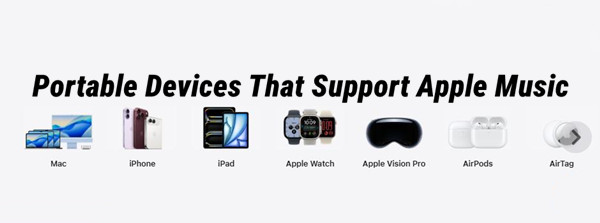
Apple officially supports Apple Music on iPhone, iPad, iPod Touch, Mac, Windows PC, and Android devices. On Android, users can install the Apple Music app, sign in with an Apple Account, access their library, and download music for offline listening. An Android-based portable music player may therefore support Apple Music if its software environment meets Apple's requirements, but support varies by device.
In general, Apple Music playback depends on the Apple Music app, Apple Music Web Player, or a native integration, while traditional MP3 players rely on compatible local audio files.
Part 2. Can You Play Apple Music on an MP3 Player?
Yes, but the method depends on the player. Android-based music players that support the Apple Music app can stream songs and download them for offline listening. These downloads remain managed within Apple Music rather than becoming ordinary MP3 files.
A traditional MP3 player requires compatible local audio files instead. Apple's iTunes Store purchases provide one example. Apple states that iTunes Store songs are DRM-free 256-kbps AAC files, described as iTunes Plus, and Sony documents transferring them to supported Walkman models.
Playback still depends on the player's supported formats and DRM requirements. For some Walkman transfer methods, Sony states, "Playlists of the Apple iTunes software are not transferable." Traditional MP3 players therefore use compatible local files, while Apple Music subscription content requires a supported Apple Music environment.
Part 3. How to Put Apple Music on an MP3 Player
If your MP3 player does not support the Apple Music app, you can convert Apple Music to a DRM-free audio format such as MP3. Tools like ViWizard Apple Music Converter can convert Apple Music songs, albums, playlists, and artists to MP3, WAV, FLAC, AIFF, M4A, and M4B. Choose MP3 for broad compatibility, or WAV and FLAC if your player supports them. The converted files retain details such as title, album, artist, and genre, and are saved without DRM protection. You can then transfer them to a compatible MP3 player for offline listening.
Keep the converted Apple Music tracks for personal use only. ViWizard Apple Music Converter is available for both PC and Mac. Select the version for your system and follow the steps below.

Need Apple Music in more flexible audio formats? ViWizard Apple Music Converter helps Apple Music subscribers create a personal music library with seamless music backup. Build your collection and keep your music beyond the Apple Music app.
Step 1Choose an Audio Format Supported by Your MP3 Player
Before converting, check which audio formats your MP3 player supports in the device specifications or user manual. If it supports MP3, this is a suitable choice for broad compatibility. Otherwise, choose another format supported by your player, such as WAV or FLAC.
Step 2Convert Apple Music to a Compatible Audio File

Launch ViWizard Apple Music Converter on your Windows PC or Mac. Open the Apple Music library and select the songs, albums, playlists, or artists you want to convert. In the output format or settings panel, choose the format from Step 1, adjust the available audio settings if needed, and start the conversion. When the conversion finishes, open the output folder or conversion list to find the converted files.
Key Features of ViWizard Apple Music Converter
Free Trial Free Trial* Security verified. 5, 481,347 people have downloaded it.
- Convert Apple Music songs, playlists, albums, and artists
- Export Apple Music in 6 formats for different devices and players
- Preserve metadata and lyrics when creating music collections
- Organize converted music by artist and album
- Batch download large Apple Music collections
01Download and install ViWizard Apple Music Converter for your PC or Mac.
02Open the program and sign in to your Apple Music account using the built-in web player.
03Go to Settings > Preferences > Conversions and select MP3 as the output format. You can also adjust the bit rate, sample rate, and choose whether to keep lyrics.

04Browse your Apple Music library or search for songs, albums, or playlists you want to convert within ViWizard.

05Click the "+" button when it's highlighted. ViWizard will analyze the link, load all the tracks, and add them to the conversion list. Confirm your selections before proceeding.

06Go to the conversion list and click Convert. Wait for the process to finish. Your converted MP3 files will appear in the output folder with full metadata and album art.

Step 3Transfer the Music Files to Your MP3 Player
Connect your MP3 player to the computer with a USB cable. It should appear as a connected device or removable drive in the file manager. Open the player's storage or music folder, then copy or drag the converted files from the output folder to the appropriate location. Wait for the transfer to finish before safely disconnecting the player. If your model uses dedicated transfer software, follow the manufacturer's instructions instead.
For Tradtional MP3 Player
01Connect your MP3 player to your computer using a USB cable. Windows users will see the device appear in File Explorer; Mac users will see it in Finder.
02Open the folder where your converted MP3 files are saved.
03Move or copy the files into your MP3 player's storage folder.
04Click Eject in File Explorer or Finder, then unplug your MP3 player.
For iPod
01Connect your iPod to your computer using a USB cable. iTunes should open automatically; if not, launch iTunes from the Start Menu (Windows) or Applications folder (Mac).
02Click File > Add File to Library or Add Folder to Library in the top menu and select your converted MP3 files.
03Click the iPod icon in the top-left corner of iTunes.
04In the left sidebar, click Music under Settings.
05Check Sync Music and choose either Entire music library or Selected playlists, artists, albums, and genres.

06Click Sync to start transferring.
07When syncing finishes, click Eject next to your iPod icon and disconnect the device.
Step 4Play the Music on Your MP3 Player
After disconnecting the player, open its music library and find the transferred tracks. Depending on the model, they may appear under Music, Songs, Albums, or Folders. Select a track to start playback. If the files do not appear, use Refresh, Rescan, or a similar library update option if available. Features such as playlists, album art, and metadata display depend on the player.
01Open your MP3 player and go to the Music or Library section.
02Browse your converted Apple Music tracks, which should appear organized with album art and metadata.
03Tap or select a track to play using the default media player. No internet connection or subscription is needed.
Part 4. Apple Music App vs. Local Audio Files on an MP3 Player
Apple Music playback and local audio playback use different methods. The Apple Music app manages downloaded music within the app, while a traditional MP3 player plays compatible audio files stored on the device.
| Feature | Apple Music App | Local Audio Files on an MP3 Player |
|---|---|---|
| Music source | Apple Music catalog and music added to your library | Audio files stored on the player |
| Adding music | Add music to your library, then download it in Apple Music | Transfer compatible audio files to the player |
| Offline playback | Downloaded music can be played offline in Apple Music | Stored files can be played directly on the player |
| Audio format | Apple Music manages the format used for playback | The file must use a format supported by the player |
| File transfer | Downloads are managed within Apple Music rather than as ordinary transferable audio files | Files can be transferred by USB, drag and drop, or supported transfer software |
| Subscription | Apple Music subscription content requires access to the Apple Music service | Compatible local files do not require an Apple Music subscription |
| Playlists | Playlists can be downloaded for offline playback in Apple Music | Playlist transfer depends on the player's supported features and transfer method |
| DRM | Apple Music subscription content is managed by Apple's playback system | Playback depends on the file's DRM status and the player's DRM support |
Apple confirms that Apple Music users can download songs, albums, and playlists for offline listening. These downloads are intended for playback within Apple Music rather than manual transfer to a traditional MP3 player.
Local audio playback works independently of the Apple Music app. For example, Sony documents transferring DRM-free iTunes Plus songs to compatible Walkman models. Supported formats and transfer features vary by model, and some transfer methods do not transfer iTunes playlists.
The key difference is where the music is stored and managed. Apple Music keeps downloaded subscription content within its supported playback environment, while a traditional MP3 player uses compatible local audio files.
Part 5. Conclusion
Now that the steps are complete, you can put Apple Music on your MP3 player and listen to your music whenever you want. If your player does not support Apple Music, ViWizard Apple Music Converter provides a way to convert Apple Music content into compatible local audio files for playback on traditional MP3 players or an SD card. It also supports other protected audio content, including iTunes Store audio and Audible audiobooks, for conversion to supported formats. Give it a try and see what it can do.
Can I transfer downloaded Apple Music songs to an MP3 player?
Not directly. Apple Music downloads are managed within the Apple Music app for offline playback, so they cannot simply be copied to a traditional MP3 player. If the player does not support Apple Music, you need compatible local audio files.
Can I put Apple Music songs on an SD card?
You can store compatible local music files on an SD card, but Apple Music downloads cannot simply be copied to the card for playback on a traditional MP3 player. The music must be available in a format the player supports.
Can I convert Apple Music to MP3 for an MP3 player?
Yes, with the right workflow. Apple Music subscription downloads are protected and are not ordinary audio files. ViWizard Apple Music Converter can convert Apple Music content to audio formats supported by traditional MP3 players, including MP3, WAV and FLAC.
Can I play Apple Music offline without a phone?
Yes, if the player supports Apple Music. An Android-based music player can use the Apple Music app to download songs for offline playback. A traditional MP3 player instead requires compatible local audio files stored on the player or an SD card.
You May Be Interested


Adam Gorden is always looking for new ways to explore music and videos. He likes trying different media tools and learning how to manage audio and video files with ease.

Leave a Comment (0)