


Apple Music is now much easier to use on both Windows PCs and Macs, making it available beyond Apple's own devices. The service can be accessed on a computer through the Apple Music app, iTunes, or a web browser. Windows 10 users can still use iTunes on older systems, while newer Windows 11 and macOS versions offer the dedicated Apple Music app through the Microsoft Store or App Store. You can also visit music.apple.com to use Apple Music in a compatible browser.
With the desktop app, users can access over 100 million songs and live radio stations, all ad-free, while managing music libraries alongside local audio files. Just sign in with your Apple ID, and your library can sync across devices when "Sync Library" is enabled, with no need to transfer music manually.
In this guide, we'll show how to listen to Apple Music on a computer, including how to install the app, stream music online, and download songs for offline listening. We'll also cover the Apple Music Web Player and an extra tip for keeping long-term access to Apple Music after canceling your subscription.
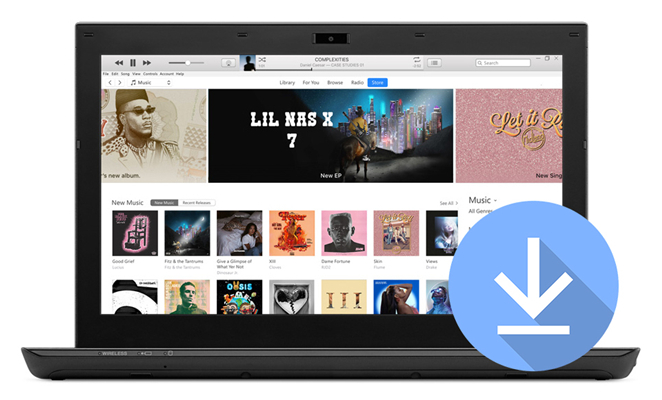
Learn how to save Apple Music to your computer on Mac and Windows, including downloading music for offline playback, saving songs as MP3, WAV, or FLAC, and redownloading iTunes purchases.
Part 1. Can You Use Apple Music on a Windows PC or Mac?
Yes. Apple Music works on both Windows and Mac, but setup differs. Mac users access it through the built-in Music app, while Windows users install the Apple Music app or iTunes. The workflow is similar, with only interface differences. Both require an Apple ID and subscription, since Apple Music is subscription-based.
Windows Requirements:
Newer Windows systems support the Apple Music app, while older systems rely on iTunes. Windows 11 uses the Apple Music app, while Windows 10 or earlier is mostly limited to iTunes.
| App | OS Support | Requirements | Key Notes |
| Apple Music app | Windows 11 (latest versions only) | Modern PC, Microsoft Store | New app for Apple Music streaming, downloads, and library sync |
| Apple TV app | Windows 11 | Modern PC, Microsoft Store | For movies and Apple TV+ content |
| Apple Devices app | Windows 11 | USB support, modern PC | Used for iPhone/iPad backup, restore, and sync |
| iTunes (legacy) | Windows 7 or later | Basic PC (1GHz CPU, 512MB RAM, 400MB storage) | Older all-in-one app for music and device management |
Mac Requirements:
Modern macOS uses the Music app, while older versions used iTunes. On macOS Catalina (10.15) and later, iTunes is fully replaced by the Music app.
| App | macOS Version | Requirements | Key Notes |
| Music app | macOS 10.15 (Catalina) or later | Modern Mac | Default Apple Music app for streaming and downloads |
| Apple TV app | macOS 10.15+ | Modern Mac | For TV shows and movies |
| Finder / Apple Devices features | macOS 10.15+ | Modern Mac | Used for iPhone/iPad syncing and backups |
| iTunes (legacy) | macOS 10.14 or earlier | Intel Mac | Old version replaced on newer macOS |
Web Access:
Apple Music also offers a web player for streaming in any browser. No installation is needed, but offline downloads and local file management are not supported.
| Platform | Requirements | Key Notes |
| music.apple.com | Any modern browser | Streaming only |
Part 2. How to Download and Install Apple Music on Windows PC & Mac
Getting started with Apple Music depends on your system. On Mac (macOS Catalina or later), it's already built into the Music app - no installation needed, just sign in with your Apple ID. On Windows, install either the Apple Music app from the Microsoft Store or iTunes for older systems.
The new Windows Apple Music app is lighter and focused on streaming, while iTunes is heavier but includes device management. Both require a subscription to Apple Music, with a 1–3 month free trial for new users. After signing in, your library syncs automatically across devices.
For Windows 10 (iTunes):

01Open the Microsoft Store or a browser and search for iTunes for Windows from Apple's official page.
02Click Get or Download, then install iTunes on your PC.
03Open the Start menu and launch iTunes, ensuring your PC is connected to the internet.
04Click Account > Sign In, then enter your Apple Account (Apple ID) used for Apple Music.
05Go to the Music section in iTunes and wait for your Apple Music library to sync if your subscription is active.
For Windows 11 (Apple Music):

01Open the Microsoft Store from the Start menu.
02Search Apple Music, then select the official app by Apple.

03Click Install, then launch the app after installation.
04Sign in with your Apple Account to load your library and preferences.
05Go to Settings > General, then enable Sync Library to sync music, playlists, and downloads across devices with an active subscription.
For macOS (Apple Music):
01Open the Music app from Launchpad or Applications, since it is built into macOS Catalina and later.
02Click Account > Sign In, then enter your Apple Account.
03Go to Music > Settings > General, then enable Sync Library to keep your Apple Music content updated across Apple devices using the same account.
Part 3. How to Listen to Apple Music on Windows PC or Mac Using the Desktop App (Online)
The desktop app is the main way to access full Apple Music features on a computer. On Mac, it runs through the Music app; on Windows, through the Apple Music app or iTunes. Everything streams from Apple Music, so a stable internet connection is required. After signing in, you can stream music, access radio, and manage your library in one place. Faster networks reduce buffering. The desktop app also supports Lossless and Spatial Audio, plus a MiniPlayer for multitasking.
Option 1. Use iTunes on Windows 10
01Open iTunes from the Start menu or desktop on Windows 10.
02Sign in with your Apple ID linked to an active Apple Music subscription.
03At the top, select Music in the media selector.

04In the left sidebar, click For You, Browse, or Radio.
05Click any song, album, or playlist to stream instantly.
06If your library is missing, go to Edit > Preferences > General and turn on iCloud Music Library to sync across devices.

Option 2. Use the Apple Music App on Windows 11 or macOS
01Open the Apple Music app from Start, Dock, or Applications.
02Sign in with your Apple ID and active Apple Music subscription.
03Click Listen Now in the sidebar.
04Use Browse for new music and charts, or Radio for stations.
05Click any track to start streaming.
06Go to Settings > General and turn on Sync Library to sync your library across devices.
Part 4. How to Listen to Apple Music on Windows PC or Mac Using the Web Player (Online)
The Apple Music Web Player is ideal for users who don't want to install software or are using shared/restricted devices. It runs in browsers like Chrome, Edge, Safari, or Firefox. Go to music.apple.com, sign in, and start streaming. Since it runs in the browser, it uses minimal storage and no permanent downloads. However, advanced features like offline downloads, deeper settings, and local file management are only available in the desktop app of Apple Music.
Use music.apple.com:

01Open Chrome, Edge, Safari, or Firefox.
02Go to music.apple.com.
03Sign in with your Apple ID and Apple Music subscription.
04Use the sidebar for Listen Now, Browse, Radio, and Library.
05Click any song or playlist to stream.
Part 5. How to Download Apple Music for Offline Listening on Windows PC & Mac
Offline mode is useful for travel, weak networks, or saving data. With a subscription, you can download songs, albums, or playlists in the Apple Music app (Windows) or Music app (Mac), or in iTunes (Windows), by clicking the download icon. Downloads are stored in system-managed locations on both Mac and Windows.
For long-term access after canceling Apple Music, ViWizard Apple Music Converter can convert Apple Music tracks to MP3 for local backup and offline use outside the app.
Option 1. Download Apple Music Songs with a Subscription
Open the Apple Music app on Windows or the Music app on Mac, then sign in with your Apple ID. Search for a song, album, or playlist, or open it from your Library. If it is not saved, click Add to Library first. After it is added, click the Download icon (cloud with a down arrow) next to the item. The content is saved to your music library for offline listening. It only works inside the app and cannot be transferred to external devices or burned to a disc.
01Open the Apple Music app or iTunes.
02Sign in with your Apple ID and active Apple Music subscription.
03Go to Browse or use Search to find music.
04Click Add to Library if needed.
05Click the Download icon next to a song, album, or playlist.
06Go to Library > Downloaded Music to access offline tracks.
07Downloads stop working if the subscription ends.
Option 2. Download iTunes Purchases for Offline Listening
Open iTunes on Windows or the Music app on Mac, then sign in with the Apple ID used for purchases. Go to Account > Purchased and open the Music section to view bought songs and albums.
Click the Download icon (cloud button) next to each item to save it to your computer. These purchases are DRM-free, so they can be used outside the app. To manage file format, open Settings or Preferences, set Output Format to MP3, and choose an output folder. Click Convert to start. When finished, files are saved locally and can be opened in Finder (Mac) or File Explorer (Windows) for offline use outside Apple Music.
01Open iTunes (Windows) or Apple Music (Mac).
02Sign in with your Apple ID used for purchases.
03Go to Account > Purchased.
04Click the Download icon next to songs or albums.
05Wait for download to finish to store files locally.
06Purchased music stays available offline and can be re-downloaded anytime with your Apple ID.
Option 3. Convert Apple Music to MP3 for Permanent Offline Listening
Apple Music downloads stay inside the app and stop working when the subscription ends. Because of this limit, some users convert songs to MP3 for more flexible offline use. This is where ViWizard Apple Music Converter is used.
Install ViWizard Apple Music Converter on Windows or Mac, then open it and load your Apple Music library. Select songs, albums, or playlists, then choose MP3 as the output format, or other formats like WAV or FLAC if needed. Start the batch conversion to process multiple tracks at once.
After conversion, the songs are saved as standard audio files on your computer. You can move them to other devices, keep them for long term offline access, and use them outside the Apple Music app. ViWizard also supports fast batch conversion and keeps the outputs close to the original.

Key Features of ViWizard Apple Music Converter
Free Trial Free Trial* Security verified. 5, 481,347 people have downloaded it.
- Convert Apple Music songs, playlists, albums, and artists
- Export Apple Music in 6 formats for different devices and players
- Preserve metadata and lyrics when creating music collections
- Organize converted music by artist and album
- Batch download large Apple Music collections
 Step 1: Install and Launch the Converter
Download and install the converter on your Windows or Mac computer. Open the app and sign in with your Apple Music account. This lets the tool load your music library, including songs, albums, and playlists. Wait a moment until your library fully appears before moving on.
 Step 2: Choose Output Format and Audio Settings
Go to the preferences area and choose an output format like MP3, M4A, WAV, or FLAC. You can also adjust audio quality if needed, such as bit rate or sample rate. Keep metadata options turned on so song names, artists, albums, and artwork stay correct after conversion.
 Step 3: Select Music from Your Apple Music Library
Browse your Apple Music library inside the app and choose what you want to save. You can pick single songs, full albums, or full playlists. Make sure your selection is correct before continuing, especially if you have a large library.
 Step 4: Convert and Access Your Music Files
Click the Convert button to start processing your music. Wait for the conversion to finish. When it is done, open the output folder to find your files. You can now play them on your computer, move them to other devices, or add them to other music apps for offline listening.
Part 6. How to Update Apple Music on Windows PC & Mac
Keeping Apple Music updated helps improve performance and stability. On Windows, updates come through the Microsoft Store for the Apple Music app, or Apple Software Update when using iTunes. On Mac, Apple Music updates through macOS Software Update. Most updates install automatically, but users can check manually if the app has problems or is missing features.
For Windows 10 (iTunes):
01Open the Microsoft Store from the Start menu.
02Click your profile icon > Downloads and updates.
03Select Get updates and wait for the scan.
04If iTunes appears, click Update and keep your PC connected until it finishes.
For Windows 11 (Apple Music):
01Open the Microsoft Store.
02Go to Library, then click Get updates.
03Allow updates to install automatically if Apple Music is listed, ensuring compatibility with the latest Windows and Apple Music features.
For macOS (Apple Music):
01Click the Apple menu () and open System Settings.
02Go to General > Software Update.
03Click Update Now or restart if prompted, since Apple Music updates are included in macOS system updates.
Part 7. How to Uninstall Apple Music on Windows PC & Mac
Uninstalling Apple Music depends on the system. On Windows, you can remove Apple Music or iTunes through Settings or the Microsoft Store uninstall option. This only removes the app and does not delete your Apple ID or cloud library. On Mac, Apple Music is part of the built-in Music app and cannot be removed, but you can sign out of your Apple ID to stop using it. Your music library stays in your account and can be restored by signing in again.
For Windows 10 (iTunes):
01Open Control Panel > Programs > Programs and Features.
02Select iTunes, then click Uninstall.
03Follow prompts and restart your PC. Your Apple Account and Apple Music library remain stored in iCloud.
For Windows 11 (Apple Music):
01Open the Start menu and find Apple Music.
02Right-click it, then select Uninstall.
03Confirm removal, or use Settings > Apps > Installed apps > Apple Music > Uninstall. Your Apple Music data remains in your account.
For macOS (Apple Music):
01Open the Music app, then go to Music > Settings.
02Click Account > Sign Out to disconnect your Apple Account.
03Apple Music cannot be fully uninstalled since it is system built-in, but you can stop syncing by turning off Sync Library in settings.
Part 8. Best Apple Music Desktop App Tips and Tricks
Apple Music on computer is more than streaming. It is about using the app efficiently. A few simple tips can get more from features like Lossless Audio and Spatial Audio, plus better multitasking control.
Tip 1. Turn On Lossless and Spatial Audio
01Open Apple Music on your computer.
02Go to Music (Mac) or Edit (Windows).
03Click Settings or Preferences.
04Go to Playback > Audio Quality.
05Turn on Lossless Audio.
06Turn on Hi-Res Lossless if available.
07Enable Dolby Atmos or Spatial Audio if you want.
08Close settings and start playing music again.
Read More: How to Get Lossless Audio on Apple Music
Tip 2. Use Mini Player
01Open Apple Music or iTunes.
02Play any song.
03Click Mini Player.
04Move it anywhere on your screen.
05Keep it on top to control playback from the Mini Player.
06Click Expand to return to full view.
Read More: Apple Music MiniPlayer: How to Get, Exit, and Customize It
Tip 3. Use Keyboard Shortcuts
01Open Apple Music or iTunes.
02Press Space to play or pause.
03Press Ctrl or Command + Right Arrow to skip.
04Press Ctrl or Command + Left Arrow to go back.
05Press Ctrl or Command + Up or Down Arrow to change volume.
06Press Ctrl or Command + L to open the current song.
07Press Ctrl or Command + Shift + M to open Mini Player.
Tip 4. Fix Apple Music Duplicates
01Open the Apple Music app.
02Browse your library and right-click duplicate songs or albums.
03Click Delete from Library.
04Sign out of your Apple ID in the Apple Music app.
05Close the app, then reopen it.
06Sign back in and check your library.
07Go to Settings in the Apple Music app.
08Make sure Sync Library is on. If it is already on, turn it off and back on to refresh your library.
Read More: Fastest Way to Check and Delete Duplicates on Apple Music
Tip 5. Adding a Desktop Shortcut
Using the Start Menu
01Open the Start Menu and find the Apple Music app.
02Right-click the app, select More, then Open file location.
03In the folder, right-click the Apple Music shortcut.
04Select Send to > Desktop (create shortcut).
Using the Taskbar
01Open the Apple Music app.
02Right-click the Apple Music icon in the taskbar.
03Select Pin to taskbar.
Part 9. Apple Music App vs. iTunes (Key Differences)
The Apple Music app is the modern streaming-focused version, while iTunes is the older all-in-one tool for music and device management. Apple Music is lighter and built for streaming Apple Music, while iTunes is heavier but still used for legacy devices and local library control. Apple is gradually moving users toward the Apple Music app on newer systems.
The Apple Music app combines your iTunes library with Apple's subscription streaming catalog. It has a cleaner interface and offers features like personalized recommendations, curated playlists, and Lossless Audio. iTunes focuses more on local music organization, purchases, and device syncing, which makes it better for managing personal collections.
On Windows 10 and later, Apple Music has replaced iTunes in many cases and has been available on Windows 11 since 2023. However, some users still find it less smooth for playlist management and general performance compared to iTunes.
In short, Apple Music is better for streaming and modern features, while iTunes is better for local library management and device control.
| Service | What it is | How to access | Main use |
|---|---|---|---|
| Apple Music | Music streaming app | Subscription app on Apple, Android, Windows | Listen to music and download songs |
| iTunes | Old music/library tool (Windows only now) | Windows app | Manage local music and old purchases |
| Apple Podcasts | Free podcast app | Apple devices + web | Listen to podcasts |
| Apple Books | Reading and audiobook app | Apple devices | Read ebooks and listen to audiobooks |
| Apple Music Classical | Classical music app | Apple Music subscription | Find and listen to classical music |
| Apple Devices | iPhone/iPad manager for Windows | Windows app | Backup and sync Apple devices |
| Apple TV | Video streaming app | Apple devices + smart TVs | Watch movies and shows |
Part 10. Conclusion
Apple Music works smoothly on both Windows PC and Mac, with options to use the desktop app, iTunes, or the web player depending on your system. For most users, the desktop app offers the best experience, while the web player is a quick way to listen without installing anything. Once you choose the right method for your device, setup is simple and easy to manage.
If you want more flexibility, you can also explore tools like the ViWizard Apple Music Converter for saving songs for long-term offline access and playback outside the Apple Music app.
You May Be Interested

Where Is the Downloaded Apple Music Stored on Your Devices

Transfer Your iTunes/Apple Music Library to a New Computer

How to Authorize/Deauthorize Your Computer for Apple Music

How to Move Your Apple Music Library to iTunes (Step-by-Step)

7 Ways to Transfer Your iTunes Library (Playlists) to Apple Music


Adam Gorden, the digital media specialist at ViWizard, is dedicated to providing the best solutions for digital media management, including audio and video conversion, file optimization, and media workflow enhancements.

Leave a Comment (0)