


- Part 1: Can You Use Apple Music with VirtualDJ?
- Part 2: Convert Apple Music to VirtualDJ Compatible Audio Files (Best Workaround)

- Part 3: Import Converted Apple Music into VirtualDJ
- Part 4: Import Converted Apple Music into VirtualDJ Remote
- Part 5: Mix Apple Music in VirtualDJ
- Extra Tip: Upload Your VirtualDJ Mixes to Apple Music
- Pro Tip: Best Practices for VirtualDJ

VirtualDJ is a favorite for DJs because it combines powerful features with user-friendly interface. It is very stable and optimized on both Windows and Mac, and now even works on iOS and Android with its Virtual Remote app, offering broad controller support, powerful video and karaoke feature, as well as excellent stem separation. These features make it popular for DJs at all levels.
Many DJs want to use Apple Music with VirtualDJ, but currently Apple Music tracks cannot be used directly because of DRM protection. This means that even with a subscription, you cannot load streaming Apple Music tracks into VirtualDJ or VirtualDJ Remote. If you do not want to switch to other DJ software supported by the DJ with Apple Music project, the only remaining option is the AutoMix feature in Apple's own Music app. It allows smooth transitions on iOS devices, but it does not work with DJ software or DJ hardware.
There is still a solution, though it is not official. VirtualDJ users can use their Apple Music library by converting tracks to compatible formats like MP3. Once converted, these tracks can be imported into VirtualDJ and mixed just like other local audio files.

Need Apple Music in more flexible audio formats? ViWizard Apple Music Converter helps Apple Music subscribers create a personal music library with seamless music backup. Build your collection and keep your music beyond the Apple Music app.
Part 1: Can You Use Apple Music with VirtualDJ?

You open VirtualDJ, excited to mix tracks from Apple Music, but disappointment quickly hits. While you can access your iTunes or Music library in the software, your Apple Music tracks are nowhere to be found.
Why Can't I Use Apple Music with VirtualDJ?
The reason is DRM, short for Digital Rights Management. Apple Music tracks are protected so they can only be played inside Apple's own apps and supported platforms. Because of this protection, Apple Music songs cannot be used in VirtualDJ unless official integration is available, such as in DJ software like Serato. While VirtualDJ does support some streaming services like SoundCloud and TIDAL and works with purchased or downloaded music, Apple Music remains unavailable unless the tracks are converted to standard formats like MP3 or WAV.
Music Services Supported by VirtualDJ:
TIDAL
SoundCloud
Beatport
Beatsource
Deezer
DJ Software with Apple Music Streaming Support:
Think of it this way: your Apple Music library is ready to mix, but VirtualDJ can only "read" music it recognizes. DRM is the lock, and you need the right key to get those songs working in your decks.
Part 2: Convert Apple Music to VirtualDJ Compatible Audio Files (Best Workaround)
VirtualDJ works with common audio formats such as MP3, WAV, AAC, and AIFF. However, Apple Music songs cannot be used like regular audio files, and downloaded tracks stay locked in the protected M4P format. VirtualDJ cannot read this format, which is why Apple Music tracks do not appear in the software.
Key Supportive Formats:
- Apple Music Downloads: M4P (protected)
- iTunes Purchases: AAC (unprotected)
- Virtual DJ Supported Formats: MP3, WAV, CDA, WMA, ASF, OGG, M4A, AAC, AIF, FLAC, MPC, APE, AIFF, OMG
- ViWizard Output Formats: MP3, M4A, M4B, WAV, AAC, FLAC
Tool Required: ViWizard Apple Music Converter
So how can you use Apple Music with VirtualDJ? The practical solution is to convert Apple Music tracks into VirtualDJ compatible formats. ViWizard Apple Music Converter removes DRM and saves standard audio files directly to your Windows or Mac computer. These files can then be used in VirtualDJ and with VirtualDJ Remote.
ViWizard Apple Music Converter also keeps the original audio quality and lets you adjust settings like sample rate, bit rate, and channels to suit your DJing needs. For example, MP3 files can be saved at 256 Kbps or 320 Kbps. The converted tracks are organized by albums, playlists, or artists, with all original ID3 tags included. Once converted, you can drag and drop the tracks into your VirtualDJ library and start mixing right away.
Key Features of ViWizard Apple Music Converter
Free Trial Free Trial* Security verified. 5, 481,347 people have downloaded it.
- Convert Apple Music songs, playlists, albums, and artists
- Export Apple Music in 6 formats for different devices and players
- Preserve metadata and lyrics when creating music collections
- Organize converted music by artist and album
- Batch download large Apple Music collections
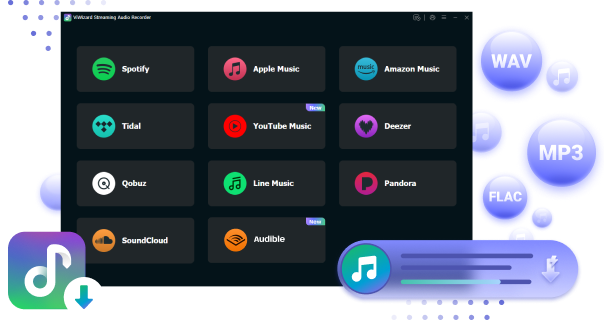
Step 1Download and Install ViWizard Apple Music Converter

First, download and install the ViWizard Apple Music Converter on your computer. This tool will help you convert Apple Music tracks into formats that are compatible with Virtual DJ, like MP3 or WAV. Once installed, open the app and log in with your Apple Music account using your Apple ID. This will give you access to your entire music library. You can now choose the Apple Music tracks you want to convert for mixing in Virtual DJ.
Step 2Choose the Output Format

To make sure your music works smoothly with Virtual DJ, select a widely supported audio format, such as MP3 or WAV. To do this, click on the settings icon in the top-right corner of the ViWizard app. You can customize the output format, as well as settings like sample rate, bit rate, and audio channels to match your DJing preferences. After adjusting these settings, click "OK" to save your preferences.
Step 3Add Apple Music Tracks and Start Conversion

Now, browse your Apple Music library in ViWizard and select the songs, albums, or playlists you want to convert. You can also paste a specific URL for an album or playlist if you prefer. Once you've selected your tracks, click the "Add to Conversion List" button to queue them for conversion. Then, hit the "Convert" button, and ViWizard will start downloading and converting your Apple Music tracks into the chosen format.
Step 4Access and Import Your Converted Files

Once the conversion is complete, you can find your new files in the "History" section of ViWizard. Click the folder icon to open the location where your converted tracks are saved. From there, you can transfer them to your computer, ready to be imported directly into Virtual DJ for your mixes.
Part 3: Import Converted Apple Music into VirtualDJ
Once your Apple Music tracks are converted to a format that VirtualDJ can read, such as MP3, you need to add them to the software. Then select the device you want to use, either the VirtualDJ desktop app or the VirtualDJ Remote mobile app.
Import Music on PC & Mac (Desktop)
Open VirtualDJ on your desktop and go to the Local Music section on the left. Expand folders like Desktop, Drives, iTunes, Music. If your converted tracks are not visible, browse to their location and add them manually.
Option 1: Use the File Button
Step 1 Open VirtualDJ on your computer.
Step 2 In the main interface, locate the Local Music section on the left-hand side.

Step 3 Click the + (Add) button next to the folder options. This expands options like Desktop, Drives, iTunes, Music.

Step 4 Click the + button next to the Music folder. All compatible music files stored on your computer will appear, including your converted Apple Music tracks.
Step 5 Browse to the folder containing your converted Apple Music tracks and select them.
Step 6 Wait for the tracks to appear in the Local Music library. They are now ready to load onto Deck 1 or Deck 2.
Option 2: Drag and Drop Files
Step 1 Open VirtualDJ and ensure the Local Music panel is visible.
Step 2 Open File Explorer (Windows) or Finder (Mac) and navigate to your converted Apple Music tracks.
Step 3 Select the tracks you want to mix.
Step 4 Drag the selected tracks directly onto Deck 1 or Deck 2 in VirtualDJ.
Step 5 Wait for the tracks to fully load onto the deck before starting your mix.
Option 3: Use iTunes XML Sharing
Step 1 Open iTunes (Windows or older Mac) or the Music app (Mac with macOS Catalina or later).
Step 2 Go to File > Add File to Library or Add Folder to Library, then select the folder containing your converted Apple Music tracks.

Step 3 Open iTunes > Preferences > Advanced (Mac) or Edit > Preferences > Advanced (Windows) and check Share iTunes Library XML with other applications.

Step 4 Open VirtualDJ and navigate to Local Music > iTunes.

Step 5 Locate your converted Apple Music tracks in the list.
Step 6 Drag the tracks onto Deck 1 or Deck 2 to start mixing.
Step 7 If tracks do not appear, open VirtualDJ Settings > iTunes and verify the path to your iTunes XML file.
Part 4: Import Converted Apple Music into VirtualDJ Remote
Transfer your converted tracks via iTunes, Finder, USB, or Android File Transfer. Open VirtualDJ Remote, and the tracks will appear in Local Music, ready for mixing.
iOS: Transfer Using iTunes or Files App
Step 1 Connect your iPhone or iPad to your computer using a USB cable.
Step 2 Open iTunes (Windows or older Mac) or Finder (Mac with macOS Catalina or later).
Step 3 Select your device icon in iTunes or Finder.
Step 4 Open File Sharing (iTunes) or the Files tab (Finder) and select VirtualDJ Remote.
Step 5 Drag and drop your converted Apple Music tracks into the VirtualDJ Remote folder.
Step 6 Open the Files app on your iOS device and confirm the tracks appear in the folder.
Step 7 Open VirtualDJ Remote on your iOS device. The tracks will appear in Local Music, ready to load onto the decks.
Android: Transfer Using USB or Android File Transfer (Mac)
Step 1 Connect your Android device to your computer using a USB cable.
Step 2 On your Android device, select File Transfer / MTP mode.
Step 3 Open File Explorer (Windows) or Android File Transfer (Mac) and browse your device storage.
Step 4 Locate the VirtualDJ Remote folder on your device.
Step 5 Drag and drop your converted Apple Music tracks into this folder.
Step 6 Open VirtualDJ Remote on your Android device. The tracks will appear in Local Music, ready to load onto the decks.
iOS & Android: Add Apple Music to VirtualDJ Remote
Step 1 Ensure VirtualDJ Remote is installed on your mobile device.
Step 2 Connect your mobile device and desktop to the same Wi-Fi network.
Step 3 Open VirtualDJ on your desktop.
Step 4 Launch VirtualDJ Remote on your mobile device. The app should automatically detect your desktop session.
Step 5 Browse the Local Music or iTunes section in the app to locate your converted Apple Music tracks.
Step 6 Load the tracks onto the virtual decks to start mixing directly from your mobile device.
Part 5: Mix Apple Music in VirtualDJ
Once your Apple Music library is imported, you are ready to start mixing. Now you can play the tracks you want, create smooth transitions, and add effects to craft your own unique mixes.
Mix on PC & Mac (Desktop)
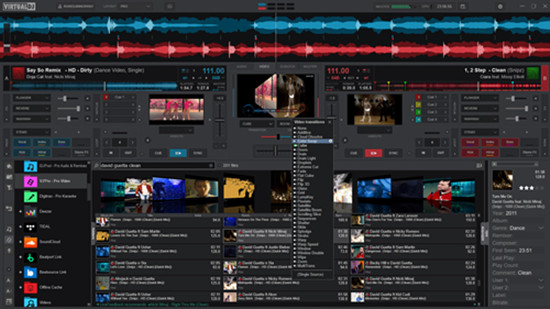
With your tracks imported, drag one onto Deck 1 and another onto Deck 2. Use the crossfader, play/pause buttons, and cue points to control playback.
Step 1 Open VirtualDJ on your computer. The main screen shows two decks on the right, the crossfader at the bottom center, and the Local Music panel on the left.
Step 2 In the Local Music panel, click the + (Add) button if needed, then navigate to the folder with your converted Apple Music tracks.
Step 3 Drag a track onto Deck 1 and another onto Deck 2. Each waveform will display the beats and structure of the track.
Step 4 Use the play/pause buttons under each deck to start or stop a track. Tap cue points above the play button to jump to saved positions.
Step 5 Adjust the EQ knobs for Bass, Mid, Treble on each deck, and use the pitch slider to change tempo. The FX panel above the EQ lets you add effects like echo, filter, or reverb.
Step 6 Tap the loop button above the waveform to set a loop and adjust the length with the + and – buttons. Use the Sample Player tab to trigger sound samples.
Step 7 When your mix is ready, click the Playlist icon and drag tracks into a new or existing playlist to save them.
Mix on Android & iOS (Mobile)
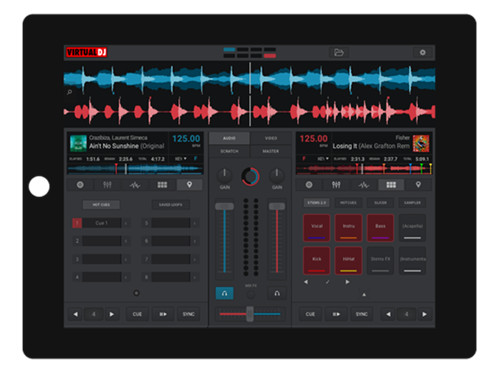
Open VirtualDJ Remote while the desktop version is running. Load tracks from Local Music or iTunes onto the virtual decks. Use the touch interface to play, pause, cue, adjust volume, move the crossfader, and apply effects. All actions sync in real time with your desktop session.
Step 1 Open VirtualDJ Remote on your mobile device while VirtualDJ is running on your desktop. The app shows two decks at the top, a crossfader at the bottom, and a Local Music browser below.
Step 2 Tap the Local Music or iTunes folder to find your converted Apple Music tracks.
Step 3 Tap a track and assign it to Deck 1 or Deck 2. The waveform will appear in the deck area.
Step 4 Tap the play/pause button to start or stop the track. Tap cue points to jump to saved positions.
Step 5 Slide the crossfader to control which deck plays, and adjust the EQ and volume faders to balance your mix.
Step 6 Tap the FX button to add effects like echo, filter, or reverb. Tap the loop button to set loop points and use the Sample pad icon to trigger sound samples. All actions sync with the desktop version in real time, allowing full control from your mobile device.
Extra Tip: Upload Your VirtualDJ Mixes to Apple Music
After recording a mix in VirtualDJ, you can add it to your Apple Music library to listen on all your devices or share it with friends.
Open VirtualDJ on your computer and click the Rec tab at the top of the interface.
In the recording options, select the source, such as Master, and choose a format that Apple Music can read, like MP3 or AAC.
Click the Record button to start capturing your mix, then play your tracks as usual until the mix is finished.
Click the Stop button when done, and note the folder where your mix is saved. Make sure the file is in a compatible format before adding it to Apple Music.
On macOS Catalina or later, open the Music app, go to File > Import, locate your VirtualDJ mix, and click Open. On macOS Mojave or earlier, open iTunes, go to File > Add to Library, select your mix, and click Open. On Windows, open iTunes, go to File > Add File to Library, select the mix, and click Open.
To sync the mix to your iPhone or iPad, connect the device to your computer. On macOS Catalina or later, open Finder, select your device, click Music, check Sync music onto [your device], select your mix, and click Apply. On Windows, open iTunes, select your device icon, click Music, check Sync Music, choose your mix, and click Apply.

On your iPhone or iPad, open Settings > Music and toggle on Sync Library to make the mix appear in Apple Music across all your devices.

Alternatively, on macOS and Windows, open the Music app or iTunes, go to Preferences > General, check Sync Library, and it will sync the mix automatically.

Pro Tip: Best Practices for VirtualDJ
To get the most out of VirtualDJ, here are some key tips and techniques to improve your workflow and mixing.
Use Hot Cues and Loops
Hot cues let you jump to the perfect part of a track instantly. Click on the waveform to set them. Loops help create smooth transitions or build tension. Adjust the start and end points until it sounds right. Setting a loop just before a big drop can make mixing easier.
Add and Customize Effects
Effects like echo, reverb, and flanger can make your mixes more exciting. Choose an effect, adjust the settings, and map it to pads for quick triggering while performing. A short echo before a transition can make the mix sound more professional.
Remix with Stems
Stems let you isolate parts of a track, like vocals, drums, or bass. You can adjust each element to remix live. For example, lowering the vocals briefly gives space to add another track without crowding the sound, adding your creative touch.
Organize Your Library
A well-organized library saves time. Tag tracks by genre, key, or energy level to find the right song fast. Create custom playlists for events or moods to keep the flow smooth when mixing live.
Practice Beatmatching
Even though VirtualDJ can sync tracks automatically, practicing manual beatmatching improves transitions and timing. Aligning beats and phrasing makes mixes tighter and more professional.
Record and Review Mixes
Recording sets helps you improve. Listening back shows where transitions could be smoother or effects better timed, helping you learn faster and try new ideas safely.
Engage with the VirtualDJ Community
Joining forums and groups is useful for learning tips and tricks. See how other DJs mix, get feedback on your sets, and stay updated on software updates and new features.
The Bottom Lines
Now you may know how to connect Apple Music to Virtual DJ. There are some rumors about Virtual DJ may implement Apple Music in the future update. Whether the rumors will come true or not, ViWizard Apple Music Converter is a convenient and efficient solution for you to dj with Apple Music. Go get one for yourself and you will like it.
You May Be Interested


Adam Gorden is always looking for new ways to explore music and videos. He likes trying different media tools and learning how to manage audio and video files with ease.

Leave a Comment (0)