


- Part 1. Can You Move Spotify Music to a USB Drive?
- Part 2. How to Download Spotify Music on a USB Drive via Desktop App (Premium)
- Part 3. How to Convert Spotify Music on a USB Drive to MP3 via Spotify Music Downloader (No Premium Required)

- Part 4. How to Transfer Spotify Music MP3 Files to a USB Drive on Windows or Mac
- Part 5. How to Play Spotify Music from a USB Drive in Your Car
- Part 6. How to Play Spotify Music from a USB Drive on Your TV
- Part 7. How to Play Spotify from a USB Drive on Other Players
- Bonus: Tips for Playing Spotify Music on a USB Drive

As someone who loves music, I spend time curating playlists and organizing my favorite tracks on Spotify, making sure everything is just right for long drives or quiet evenings at home.
Sometimes, I want to take those songs with me beyond the app, like on a USB drive for my car or TV. It might sound simple, but that is when the problem appears. Spotify is great for streaming, but it does not let you move downloaded songs directly to a USB drive.
So does that mean you are stuck streaming from the app and cannot play your music without internet or on a USB drive? Luckily, that is not the case. The only realistic way is to convert Spotify tracks into MP3 files, which can be used on USB drives, car stereos, smart TVs, and other devices. This is possible with a tool called ViWizard Spotify Music Converter. Below, I will show you exactly how to get started.

Need Spotify music for offline listening? ViWizard Spotify Music Converter helps Spotify Premium and free users save songs, playlists, albums, podcasts, and audiobooks in popular audio formats with fast, reliable conversion. Start converting and enjoy Spotify music across more devices.
Part 1. Can You Move Spotify Music to a USB Drive?
It's a bit disappointing, but you cannot move Spotify songs straight to a USB drive as normal audio files. Even with a Premium subscription, downloads are not regular MP3 files. They are protected files stored in Spotify's cache. Think of it like renting a movie—you can watch it offline, but you cannot take the file anywhere else. Plugging it into a car stereo will not work.
Why Can't I Move Spotify Music to a USB Drive?
Spotify uses Digital Rights Management (DRM) to protect its songs. Each track is stored in a digital lockbox, and only the Spotify app holds the key. Without it, most devices—including car stereos, smart speakers, or older MP3 players—will ignore the files or show an error. DRM protects artists' rights and keeps the platform legal, but it also means offline downloads are not portable.
The Practical Way to Put Spotify Music on a USB
To play Spotify music from a USB drive, you need to convert it to a standard audio format such as MP3, WAV, or FLAC. Conversion is not officially supported, but many people do it for personal use, such as playing music on a road trip. Tools like ViWizard Spotify Music Converter work on both Windows and Mac to create real files that work on any device. You can try it for free.
Part 2. How to Download Spotify Music on a USB Drive via the Spotify Desktop App (Premium)
The desktop Spotify app lets Premium subscribers download playlists, albums, podcasts, or audiobooks for offline listening. You can also change the storage location for downloaded files. By default, the files are stored in hidden folders. On Windows, this is C:\Users[Username]\AppData\Local\Spotify\Storage, and on macOS, it is ~/Library/Application Support/Spotify/PersistentCache/Storage.
You can change the download location to a USB drive, but even then the files will not play outside the Spotify app. They are cached files tied to your account and device. A car stereo or standard media player will not recognize them.
The main benefit of using a USB drive in this way is offline listening on the desktop app. It helps keep large playlists ready, saves storage space, and reduces repeated downloads. The files, however, remain playable only inside Spotify on that computer.
- A computer with the Spotify app
- A Spotify Premium account
- Enough space on your computer for downloads
- A USB drive if you want to move the folder, though the music will only play in Spotify
Plug your USB drive into your computer. If it's not formatted correctly, follow the on-screen instructions to format it as needed.
Open the Spotify app on your desktop.
Go to Settings > Storage.
Scroll down to Offline storage location.

Click Change location and select your USB drive as the new storage location. This will make things easier, and Spotify will save all future offline music downloads there. Unfortunately, previous downloads will remain where they are. You may consider deleting them and starting fresh.
Find the music, podcasts, or audiobooks you want to download.
Click the download button next to each item to save them to your USB drive.
- Pros
- Listen offline in Spotify without needing the internet
- Large playlists stay ready and organized
- Saves data when streaming
- Works well with laptops, Bluetooth speakers, or car audio
- Cons
- Cannot play files outside the Spotify app
- USB drives do not make the music fully portable
- Tracks stay tied to your Spotify account and device
- Cannot share or back up tracks like regular music files
Part 3. How to Convert Spotify Music on a USB Drive to MP3 via a Spotify Music Downloader (No Premium Required)
To take Spotify music anywhere, converting the tracks to MP3 or another standard format is the practical solution. ViWizard Spotify Music Converter allows both Premium and free users to save Spotify songs as regular audio files that can be used on a USB drive.
ViWizard can process Spotify streams and export them as MP3, WAV, or FLAC files while keeping track information like song titles, album art, and artist names. MP3 works on almost every device, while WAV or FLAC are better for higher-quality audio.
| Format | USB Support | Quality | Storage per Song | 50-Song Playlist |
| MP3 | Almost all USB devices, cars, TVs | Good | 5–10 MB | 250–500 MB |
| M4A | Most modern USB devices | Good | 5–10 MB | 250–500 MB |
| FLAC | Limited USB devices | Lossless | 20–50 MB | 1–2.5 GB |
| WAV | Computers, some car stereos | Lossless | 30–100 MB | 1.5–5 GB |
The process is simple. Add a playlist or song link to the converter, let it prepare and convert the tracks, and the files will appear in a normal folder on your computer. From there, moving them to a USB drive works like any other file. Cars, USB speakers, smart TVs, and MP3 players will recognize them immediately. Since the files are no longer tied to your Spotify account, you can rename, organize, or archive them just like any other music.
- A computer with the Spotify app
- A Spotify Premium or Free account
- ViWizard Spotify Music Converter on Windows or Mac
- Enough space on your computer for the converted files
- A USB drive to transfer the MP3 or other files
Key Features of ViWizard Spotify Music Converter
Free Trial Free Trial* Security verified. 5, 481,347 people have downloaded it.
- Convert Spotify songs, playlists, albums, podcasts, and audiobooks
- Export Spotify music in 6 formats for different devices and players
- Support Spotify Premium and free accounts for music conversion
- Preserve music metadata when organizing converted collections
- Batch download Spotify playlists and large music libraries
- Pros
- Creates normal music files like MP3, WAV, M4A, M4B, FLAC, and AIFF
- Can be copied to USB drives and play on almost any device
- No Premium account needed
- Lets you rename, organize, and save tracks freely
- Keeps song info, album art, and artist details
- Cons
- Needs extra software to convert the music
- Some tools may require subscription for full use
Step 1Download and Install ViWizard Spotify Music Converter
To get started, first download ViWizard Spotify Music Converter to your computer. Once the download is complete, run the installer and follow the prompts to set up the software. After installation, open the ViWizard program, and log in to your Spotify account. Whether you're using a free or Premium account, you can access Spotify's Web Player directly within ViWizard.

Step 2Add Spotify Music to ViWizard
Once logged in, you can easily add music to ViWizard. You can either drag and drop individual songs, albums, or playlists from Spotify directly into ViWizard, or simply paste the URL of the content you want to convert into the search bar. The tracks you select will automatically populate in the conversion list, ready for the next step.

Step 3Customize Output Audio Settings
Before starting the conversion, you'll want to adjust the output settings to match the format that works best for your USB drive. Click the Menu icon in the top-right corner of ViWizard and choose Preferences. Here, you can select from various audio formats like MP3, M4A, WAV, FLAC, AIFF, or M4B. Additionally, you can tweak the bitrate and sample rate to control the quality of your music. After making your choices, click OK to save the settings.

Step 4Select Music for Conversion
Now that your settings are ready, it's time to choose the music you want to convert. Whether you've selected individual tracks, albums, or playlists, click on the items in your list. ViWizard also lets you convert podcasts or audiobooks, and you can organize your music by title, artist, or album to make it easier to navigate.
Step 5Convert and Save to USB
Once your music is selected, click the Convert button to begin the conversion process. ViWizard will convert the tracks to the format you've selected. Once completed, the converted music files will be saved in the output folder you chose earlier. To find your newly converted music, simply click the Open Folder icon. Now, you can transfer these MP3 (or other formats) files to your USB drive, ready to be used on any device that supports MP3 playback.
Part 4. How to Transfer Spotify Music MP3 Files to a USB Drive on Windows or Mac
Once your Spotify tracks are converted to MP3, you can copy them straight to a USB drive. On Windows, open the folder containing the files, select the songs or playlists you want, and drag them onto the USB drive. On Mac, use Finder to do the same. It only takes a few seconds, and the files are ready to play.
For Windows Users

Insert your USB drive into your PC's USB port. Close or ignore any pop-up messages.
Press Windows + E to open File Explorer. In the left sidebar under This PC, find your USB drive and click it.
Open the folder where your converted Spotify MP3 files are stored.
Select the songs or folders you want to copy. To select all files, press Ctrl + A.
Right-click the selection and choose Copy, or press Ctrl + C.
Go to your USB drive window, right-click inside the window and choose Paste, or press Ctrl + V.
Wait for all files to finish copying. When done, right-click your USB drive in the sidebar and select Eject. Remove the drive safely.
Make sure your USB drive is formatted as FAT32 for most car stereos, exFAT for large drives or newer systems, or NTFS for Windows use only. Organize files into folders or playlists for easier browsing in your car or on your TV.
For Mac Users
Insert your USB drive into a USB port on your Mac. Close or ignore any pop-up messages.
Click the Finder icon in the Dock. In the left sidebar under Devices, find your USB drive.
Open the folder where your Spotify MP3 files are stored.
Select the songs or folders you want to copy. To select all files, press Command + A.
Drag the selection to your USB drive in the Finder sidebar. Wait for the copying to finish.
Right-click the USB drive in Finder and select Eject. Remove the drive safely.
Use FAT32 or exFAT for compatibility with most cars and TVs. Keep folders organized and limit playlists to about 50 songs for easier navigation.
Part 5. How to Play Spotify Music from a USB Drive in Your Car
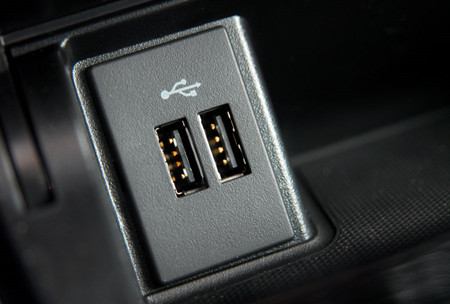
Different car stereos read USB files differently, so preparation is key. Make sure your files are in a format your stereo recognizes, usually MP3. Arrange your playlists in order if your stereo reads tracks sequentially. Plug in the USB drive, select the folder or playlist, and you're ready to go.
Find the USB port in your car, usually in the center console, glove box, or dashboard, and plug in the USB drive.
Turn on your car stereo and press the Media or Source button.
From the list of available devices, select your USB drive.
Browse folders or playlists using the touchscreen or stereo buttons.
Tap a song or playlist to start playing.
Adjust volume and skip tracks using the stereo or steering wheel buttons.
If the USB does not appear, format it as FAT32 or exFAT and keep folders simple with no more than two levels of subfolders.

This post provides the 6 most popular and easiest ways for you to play Spotify music songs in your car via a cable, Bluetooth, Android Auto, CarPlay, or external drive/CD.
Part 6. How to Play Spotify Music from a USB Drive on Your TV
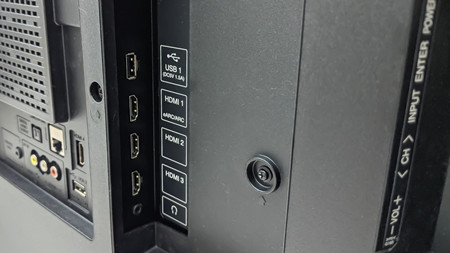
Most smart TVs can read MP3s from a USB drive, but navigation may vary. Plug in the USB, open the media or music menu, and select the folder containing your tracks. If your TV shows tracks out of order, try numbering the files or arranging them in separate folders.
Insert your USB drive into a USB port on your TV, usually on the side or back.
Use your TV remote to open the built-in Media Player or USB Player app.
Select your USB drive from the list of devices.
Open the folder with your music.
Tap a song or playlist to start playing.
Control playback and volume with your TV remote.
Organize files and limit the number of songs per folder to make browsing easier.
Part 7. How to Play Spotify from a USB Drive on Other Players
From portable USB speakers to older MP3 players, some devices require files arranged in a specific way, while others are plug-and-play.
Plug your USB drive into the USB port on your home stereo, media player, or portable MP3 device.
Turn on the device and choose USB as the source.
Use the device buttons or remote to browse folders or playlists on the USB drive.
Select a song or playlist to start playing.
Adjust volume and playback using the device controls or remote.
Make sure the device supports MP3 playback. For older devices, use shorter folder names and organized playlists for easier navigation.
Bonus: Tips for Playing Spotify Music on a USB Drive
A few extra tricks can make listening from a USB drive easier. Organize files into folders by artist, album, or playlist. You can also rename files so the titles appear correctly on your car stereo or smart TV.
-

Playlists
Organizing your music into playlists makes a big difference. Group tracks by activity, mood, or theme, like Road Trip, Workout, or Chill Music. Converters can import playlists in one go, which saves time and keeps your USB tidy.
-
Format Choice
MP3 at 320kbps works best for most devices. It balances sound quality with wide compatibility. FLAC or WAV offer higher fidelity, but many cars and TVs cannot play them.
-
USB Format
Not all drives work everywhere. FAT32 is the safest for most car stereos. exFAT handles bigger drives and files over 4GB. NTFS is mainly for Windows computers and may not work on cars or TVs.
-
File Naming
Keep names simple and clear. Use the format Artist - Song Title.mp3. Clean filenames make it easy to navigate your USB and prevent songs from showing as Track 01 or Unknown Artist.
-
Testing
Always check a few songs before ejecting. Playing files on your computer first ensures everything copied correctly and avoids surprises when you hit the road.
-
USB Selection
The drive itself matters. Cheap drives are prone to corruption, slow transfers, or skipped playback. Stick with trusted brands like SanDisk, Samsung, or Kingston. A 32GB to 128GB drive is usually enough for most music libraries.
-
Dedicated Car USB
Keeping a USB solely for car music is smart. Organize it by mood or activity, like Driving, Chill, Party, or Podcasts. This makes it a ready-to-go option without relying on your phone or mobile data.
Conclusion:
Now you have successfully transferred your Spotify songs to a USB drive. You can then insert it into any device with a USB port for playing. In fact, ViWizard Spotify Music Converter is the best Spotify solution to download music from Spotify to MP3, AAC, and other formats. You can then listen to Spotify music on any player or device anytime. It's a perfect tool, so why not give a try?
Can I download Spotify music directly to a USB drive?
Spotify allows Premium users to download music for offline listening, but the files are encrypted and can only be played in the Spotify app. You can't save them directly to a USB drive for use on other devices.
Can I convert Spotify music to MP3 and transfer it to a USB drive?
Yes, you can. With a tool like ViWizard Spotify Music Converter, you can convert Spotify music to MP3 files and transfer them to a USB drive. You can then use those MP3 files on any device that supports MP3 playback. But these converted files are for personal use only, as per Spotify's terms of service.
Can I play Spotify music on my car's USB port?
Spotify's encrypted music files won't work on a USB port in your car. However, you can still play Spotify in your car by connecting through Bluetooth, using an aux cable, or by transferring MP3 files (converted from Spotify) to a USB drive.
How do I back up my Spotify playlists to a USB drive?
You can't back up Spotify playlists directly to a USB drive due to encryption. However, you can convert your playlists into MP3 files and then transfer them to the USB drive so as to keep a backup for offline use.
Are there any legal issues when transferring Spotify music to a USB drive?
Yes, it's important to follow Spotify's terms of service. Converting and transferring Spotify music should be for personal use only. Sharing or distributing the files is against Spotify's rules.
You May Be Interested


Adam Gorden, the digital media specialist at ViWizard, is dedicated to providing the best solutions for digital media management, including audio and video conversion, file optimization, and media workflow enhancements.

Leave a Comment (0)