


Choosing a music streaming service is not always as simple as it used to be. As platforms change their plans and features, many listeners are taking a closer look before making a choice. TIDAL has moved away from its previous free tier model, while Amazon Music has changed its Prime benefits, with offline listening now mainly available through Amazon Music Unlimited.
TIDAL and Amazon Music also take different approaches to streaming. TIDAL focuses on premium audio, Hi-Res formats, and a music-focused experience, while Amazon Music combines music streaming with Prime benefits, Alexa controls, and the wider Amazon ecosystem.
The better choice depends on what matters most. TIDAL is built for listeners who value sound quality and a premium experience, while Amazon Music is designed for those who want convenience and better device integration. This comparison converts Hi-Res audio, music content, plans, features, and ecosystem support to help you choose the right service.
Part 1. TIDAL vs Amazon Music: Overview
TIDAL and Amazon Music have different strengths. Here's a quick look at what each service offers.
What Is TIDAL?
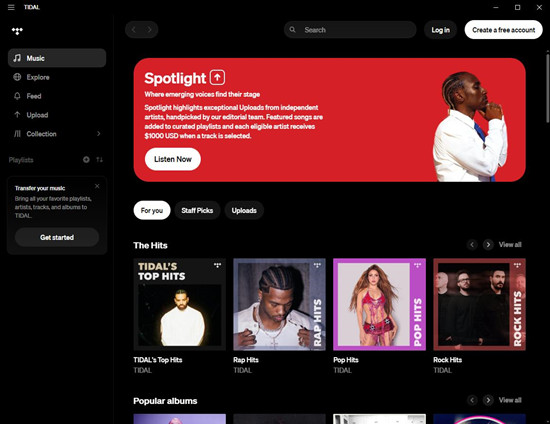
TIDAL is a Norwegian-American music streaming service focused on high-quality audio, artist-centered content, and curated listening. Launched in 2014, it offers more than 110 million tracks and hundreds of thousands of music videos from artists around the world. It works across smartphones, tablets, computers, smart speakers, and other compatible devices, while standing out with Hi-Res FLAC, lossless audio, Dolby Atmos, and its artist-first approach. TIDAL is best known as a strong choice for audiophiles and music fans who want a premium listening experience.
What Is Amazon Music?

Amazon Music is a music streaming platform operated by Amazon, offering more than 100 million songs, along with podcasts, playlists, and personalized recommendations. It connects closely with the Amazon ecosystem, including Prime, Alexa, Echo speakers, and Fire TV devices. With Alexa voice control, users can play or pause music, skip tracks, or request songs and playlists, making Amazon Music a convenient choice for everyday listening.
Part 2. TIDAL vs Amazon Music: Main Differences
The differences become clearer when you compare sound quality, content, devices, pricing, and features. Here's how the two services compare in everyday use.
01TIDAL vs Amazon Music: Supported Contents
TIDAL and Amazon Music both offer extensive music libraries, but they are built around different priorities. TIDAL focuses on premium music experiences, artist discovery, and curated listening, while Amazon Music combines streaming with Amazon's wider ecosystem, including podcasts, smart devices, and digital services.

TIDAL provides access to more than 110 million tracks and hundreds of thousands of videos. The platform emphasizes exclusive releases and detailed artist pages, making it a strong choice for listeners who love exploring albums and following artists in depth.

Amazon Music offers more than 100 million songs, along with podcasts, playlists, stations, and Amazon-exclusive content. Its integration with Amazon Prime, Alexa, Echo speakers, and Fire TV allows users to combine music with smart home controls, voice commands, and other entertainment features.
Overall, TIDAL is designed for users who want a dedicated music experience with deeper artist discovery, while Amazon Music is better suited for those who want music integrated into a broader digital ecosystem.
02TIDAL vs Amazon Music: User Interface and Experiences
TIDAL and Amazon Music offer similar streaming basics, but they are designed around different listening habits. TIDAL focuses on music discovery through artists, albums, and curated content, creating an experience that feels more like exploring a digital record collection. Amazon Music, meanwhile, connects music with Amazon's wider ecosystem, making it more convenient for users who rely on smart devices and voice controls.
In daily use, TIDAL feels more focused on music appreciation, while Amazon Music offers a more flexible experience designed to fit into users' existing digital lifestyles.
03TIDAL vs Amazon Music: Listening Experience and Formats
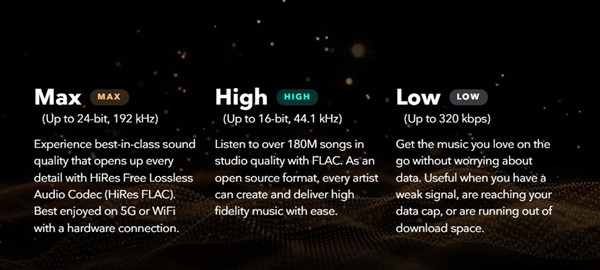
TIDAL supports lossless FLAC, Hi-Res FLAC, and Dolby Atmos Music, with Max quality offering up to 24-bit/192 kHz Hi-Res FLAC, High quality providing 16-bit/44.1 kHz FLAC, and Low quality offering up to 320 kbps AAC for data savings. Users with premium headphones, DACs, or Hi-Fi speakers may notice TIDAL's stronger audiophile positioning, while Amazon Music provides a more flexible experience for casual listeners.
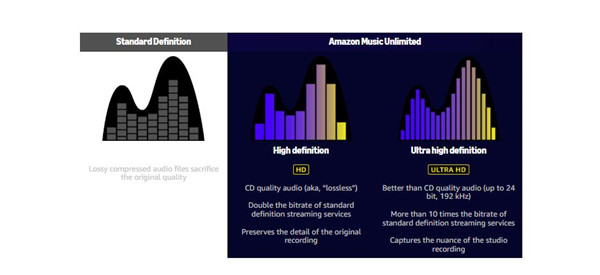
Amazon Music supports HD and Ultra HD audio, including lossless audio and Ultra HD tracks up to 24-bit/192 kHz on supported content and devices. This allows Amazon Music Unlimited subscribers to access premium audio features while maintaining the platform's focus on convenience and accessibility.
Both platforms support immersive audio formats like Dolby Atmos. TIDAL puts high-fidelity lossless audio at the center of the experience, while Amazon Music combines premium audio with its broader subscription benefits and ecosystem features.
| Feature | TIDAL | Amazon Music |
| Lossless Audio | Yes | Yes |
| Hi-Res Audio | Hi-Res FLAC (up to 24-bit/192 kHz) | Ultra HD (up to 24-bit/192 kHz) |
| Spatial Audio | Dolby Atmos | Dolby Atmos (supported content) |
| Compressed Audio | AAC | AAC |
| Offline Listening | Yes | Yes |
04TIDAL vs Amazon Music: Supported Devices
Both TIDAL and Amazon Music support major platforms, including smartphones, computers, web browsers, smart TVs, and connected audio devices. The main difference lies in the ecosystems where each service works best.
TIDAL is available on iOS, Android, Windows, macOS, and web browsers, along with various smart TVs, car systems, and Hi-Fi audio products. Through TIDAL Connect, users can stream directly to compatible speakers and audio devices, making it a strong option for dedicated audio setups.
Amazon Music is also available across iOS, Android, Windows, macOS, web browsers, Fire TV devices, and smart speakers. Its biggest advantage comes from its connection with Amazon hardware, especially Echo speakers and Alexa-enabled devices, where users can control playback, adjust volume, and request music through voice commands.
Both services offer broad device support, but TIDAL fits better into premium audio environments, while Amazon Music works better for users who want music connected with their smart home setup.
| Feature | TIDAL | Amazon Music |
| iOS & Android | Yes | Yes |
| Windows & Mac | Yes | Yes |
| Web Player | Yes | Yes |
| Smart Speakers | Wide Hi-Fi support | Best with Echo devices |
| Car Integration | Yes | Yes |
| Voice Assistant | Alexa support | Strong Alexa integration |
05TIDAL vs Amazon Music: Plans and Pricing
TIDAL and Amazon Music use different subscription models. TIDAL focuses on a premium streaming experience with high-quality audio included, while Amazon Music offers more flexible options, including a free tier, Prime benefits, and paid Unlimited plans.
TIDAL Plans:
| Plan | Price (US) | Features |
| Individual | $11.99/month | Full catalog, offline listening, Lossless FLAC, Hi-Res FLAC, Dolby Atmos |
| Family (up to 6 users) | $19.99/month | Premium features for up to 6 users |
| Student | $5.99/month | Full access with premium audio features |
| Free Trial | Varies | Available for eligible users |
Notes:
- No permanent free plan is available.
- Includes lossless audio, Hi-Res FLAC, Dolby Atmos Music, offline downloads, and ad-free listening.
- TIDAL mainly targets users who prioritize sound quality and premium listening.
Amazon Music Plans:
| Plan | Price (US) | Features |
| Free Plan | Free (with ads) | Ad-supported listening |
| Amazon Music Prime | Included with Prime | Music access with Prime membership |
| Individual Unlimited | $10.99/month | Full catalog, offline listening, HD and Ultra HD audio |
| Family Unlimited (up to 6 users) | $19.99/month | Full access for up to 6 users |
| Student Unlimited | $5.99/month | Full access with premium features |
Notes:
- Offers a free ad-supported option, unlike TIDAL.
- Prime members get music benefits included with their membership.
- Amazon Music Unlimited adds full on-demand playback, offline downloads, and HD/Ultra HD audio.
- Pricing may vary by region.
Overall, TIDAL and Amazon Music target different listeners.
For individual plans, TIDAL costs $11.99/month, while Amazon Music Unlimited costs $10.99/month. Both services offer a $19.99/month family plan for up to 6 users, making them similarly priced. The better choice depends on your priorities: TIDAL is a stronger option for audiophile-focused listening, while Amazon Music provides better value for users who already subscribe to Amazon Prime or use Alexa devices, because the service integrates naturally into Amazon's ecosystem.
06TIDAL vs Amazon Music: Features
TIDAL Features:
- Hi-Res FLAC and Lossless Audio for better sound
- Dolby Atmos for more immersive audio
- TIDAL Connect to play music on compatible speakers
- Offline Listening to download music for later
- DJ Integration for DJs using supported software and equipment
Amazon Music Features:
- Alexa Voice Control to play and search for music
- Prime Benefits for music access with a Prime membership
- HD and Ultra HD Audio for higher-quality sound
- Podcasts and Other Audio alongside music
- Personalized Recommendations based on listening habits
Part 3. TIDAL vs Amazon Music: Which One Should You Choose?
TIDAL and Amazon Music offer similar core streaming features, but they focus on different priorities. TIDAL emphasizes sound quality and a music-focused experience, while Amazon Music focuses on convenience, flexible access, and Amazon ecosystem integration.
| Feature | TIDAL | Apple Music |
|---|---|---|
| Free Option | No permanent free plan | No permanent free plan |
| Premium Pricing | $11.99/month (Individual) $19.99/month (Family) $5.99/month (Student) |
$10.99/month (Individual) $16.99/month (Family) $5.99/month (Student) |
| Music Library | 110+ million tracks | 100+ million songs |
| Music Discovery | Curated playlists, personalized recommendations, artist-focused discovery | Curated playlists, personalized recommendations, Discovery Station |
| Offline Listening | Yes (subscription required) | Yes (subscription required) |
| Supported Devices | iOS, Android, Windows, Mac, web, smart devices, Hi-Fi systems | Apple devices, Android, Windows, web, smart devices |
| Sound Quality | Lossless FLAC, Hi-Res FLAC, Dolby Atmos | Lossless Audio, Hi-Res Lossless, Dolby Atmos |
| Music Content | Songs, albums, playlists, music videos, artist content | Songs, albums, playlists, radio, music videos |
| Unique Features | TIDAL Connect, DJ integration, Hi-Res FLAC | Apple Music Sing, Apple Music Classical, AutoMix |
| Free Trial | Varies by offer | 1 to 3 months (varies) |
TIDAL Is Better If You:

TIDAL works better if you care about sound quality and use good headphones, speakers, or other audio equipment. Its Hi-Res FLAC, lossless audio, and Dolby Atmos support can help you get more detail from your music. It's also a good fit if you enjoy exploring albums, artists, and curated music. Overall, TIDAL makes more sense if you want a more premium, music-focused listening experience.
- Lossless, Hi-Res FLAC, and Dolby Atmos
- Music videos and exclusive content
- Live streams and concerts
- DJ software support, such as Serato DJ
- No permanent free plan
- Offline listening mainly on mobile
Amazon Music Is Better If You:

Amazon Music works better if you already use Amazon Prime, Alexa, or Echo devices. You can ask Alexa to play songs, albums, or playlists without reaching for your phone, making everyday listening easier. Prime members also get music benefits as part of their membership, while flexible plans give you more ways to access the service. If you already use Amazon products, Amazon Music can make your listening experience more convenient and connected.
- HD and Ultra HD audio
- Simple, easy-to-use interface
- Alexa voice control
- Limited internet radio
- High-quality audio depends on supported content and devices
- Not available in all countries
The better choice mainly depends on whether you care more about premium audio and music discovery or convenience and smart device support.
Part 4. How to Transfer Between TIDAL and Amazon Music

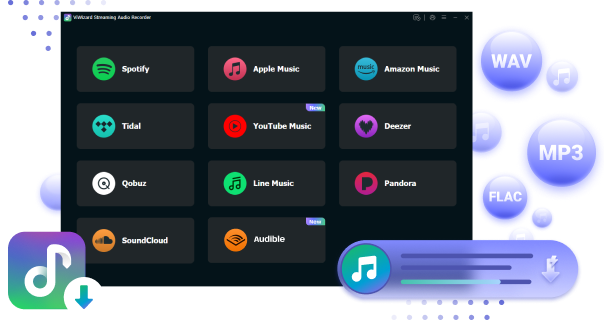
Moving between TIDAL and Amazon Music doesn't mean rebuilding your playlists from scratch. ViWizard Streaming Audio Recorder comes with a built-in Free Playlist Transfer tool that connects supported music services, matches songs automatically, and transfers playlists, albums, and tracks while keeping your library organized.
For larger music collections, it supports batch transfers, so you can move multiple playlists and songs without searching for each track manually. Beyond playlist transfer, ViWizard can also create DRM-free music copies from streaming services, allowing you to move local audio files to compatible devices or apps for more flexible playback.
Whether you're switching streaming services or building a more flexible music library, ViWizard Streaming Music Recorder makes music transfer and management easier in one place.
You May Be Interested


Adam Gorden is always looking for new ways to explore music and videos. He likes trying different media tools and learning how to manage audio and video files with ease.

Leave a Comment (0)