


As a musician or creator, using audio from YouTube in your BandLab projects can open up new creative possibilities. Many artists turn to YouTube for type beats, instrumentals, acapellas, and reference tracks to build demos, record vocals, or experiment with new styles. However, moving audio from YouTube into BandLab is not as simple as copying a link. You need the right format, proper file access, and an understanding of how BandLab handles imported tracks.
In this guide, you will learn how to download audio from YouTube, choose the best format for BandLab, and import your files on both web and mobile. You will also learn how to sync tempo, save your edits, and export or share your finished BandLab projects. Let's get started.
Part 1. Can I Use Beats from YouTube to BandLab?
Yes, you can use beats from YouTube in BandLab after you convert them to a supported file format. BandLab lets you import external audio files and use them as backing tracks, samples, or loops in your projects.
BandLab does not support direct imports from a YouTube link. You must download the audio and save it to your device first.
What Audio Formats Does BandLab Support?
- BandLab Web Studio: MIDI, MP3, MP4, WAV, AAC, M4A, and OGG.
- BandLab iOS/Android Apps: MIDI, MP3, M4A, and WAV.
You cannot download audio from YouTube as an MP3 or other open format directly. That is why a YouTube audio downloader or converter is often necessary to prepare the file for BandLab.
Tool Required: ViWizard YouTube Music Converter
A tool like ViWizard YouTube Music Converter helps you save beats in high quality formats such as WAV (16-bit) or MP3 (320kbps). These formats work well for music production and deliver professional sounding results. After you download the file, you can drag and drop it into BandLab or upload it using the Import Track button.

Key Features of ViWizard YouTube Music Converter
Free Download Free Download* Security verified. 5, 481,347 people have downloaded it.
- Download beats, instrumentals, and audio from YouTube for use in BandLab projects
- Convert YouTube audio to MP3, WAV, and other BandLab supported formats
- Convert YouTubs tracks in bulk at up to 30x faster speed
- Preserve high audio quality for music production
Is It Legal to Use YouTube Beats in BandLab Projects?
While the technical process is simple, you must respect copyright rules. Many producers allow free non commercial use of their beats, but commercial releases usually require a license. Most beat uploaders on YouTube mention usage terms in the title or description, so always verify the rights before using the beat.
Part 2. How to Download Beats from YouTube to Bandlab
To convert music from YouTube to MP3 or another BandLab supported format, download and install ViWizard YouTube Music Converter on your Windows or Mac computer. Follow the steps below to prepare your beats. After you download the files, you can also transfer them to your phone if you prefer to import and edit the beats in the BandLab app.
Step 1 Configure Output Settings for BandLab
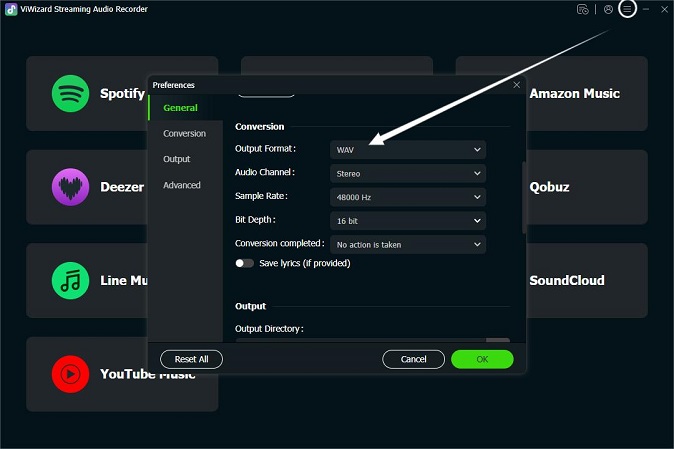
Open ViWizard on your computer. Click Menu and go to Preferences > Conversion. Select MP3 or WAV as the output format. For MP3, choose 320kbps so the beat retains clarity and punch. Set the sample rate to 44.1kHz (or 48kHz if your project requires it) to match standard DAW settings. Choose an output folder to save your files, then click OK to confirm.
Step 2 Access the YouTube Music Web Player
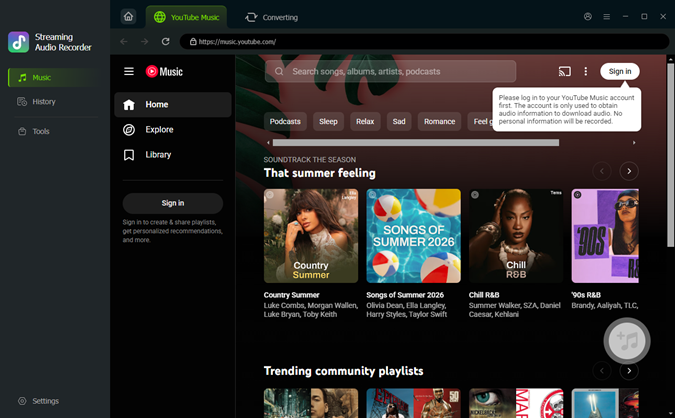
Return to the main screen and click the YouTube Music logo to open the built in web player. Sign in to your account so you can access your library, playlists, and the beats you want to download.
Step 3 Select Beats to Download
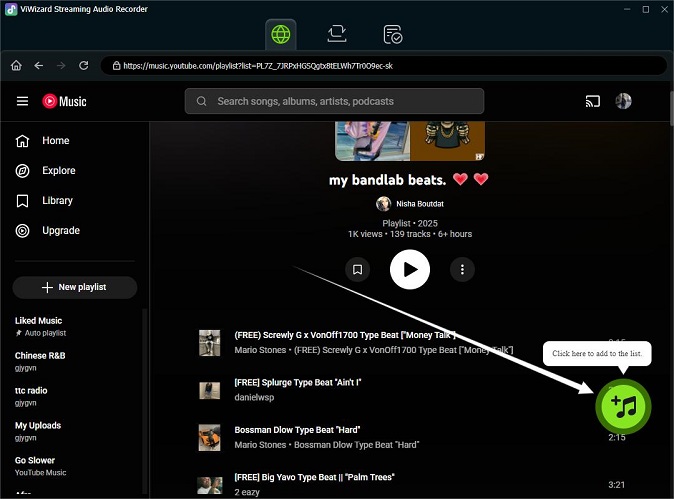
Find the beat you want to use. You can search for it, browse your library, or paste the YouTube link. Open the track or playlist and click the Add button to load the tracks. Select the specific tracks you want or choose the entire playlist, then click Add to List.
Step 4 Convert and Save to Your Device
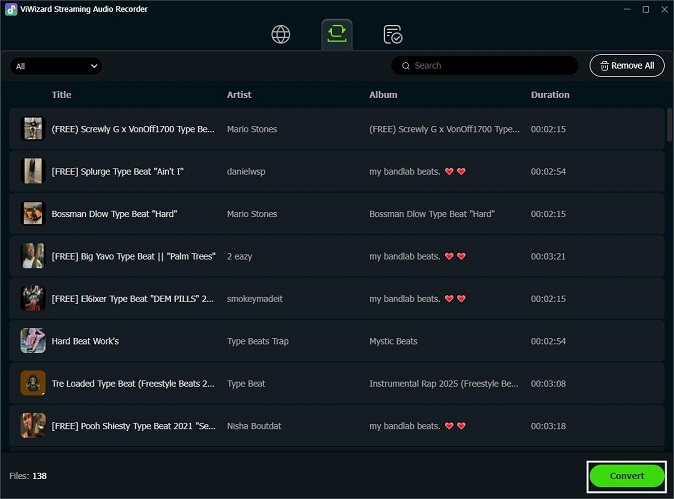
Open the conversion list and click Convert. The tool will download and convert the beats into your chosen format. After the process finishes, the files will be saved in your destination folder. You can now transfer the files to your phone or import them directly into BandLab to start editing.
Part 3. How to Import Beats from YouTube to BandLab Projects on Web
Now that you've successfully downloaded your preferred YouTube beats using ViWizard, the next steps involve seamlessly integrating these tracks into your BandLab projects. Follow the steps below to import your captured YouTube music into BandLab:
Step 1Open Your BandLab Project
Log in to your account at BandLab.com. Click the Create button in the top right corner to start a new project.

Step 2Import Converted YouTube Beats
Locate the section that says Drop a loop or an audio/MIDI/file. Click it and select the converted YouTube audio files you downloaded using ViWizard. Click Open to import the file into BandLab.

Alternatively, you can drag and drop the audio file directly into the project timeline. You can import multiple YouTube audio tracks to build layered arrangements or remix projects.

Step 3Arrange and Edit the Track
After the upload finishes, the track appears in your project. You can:
- Hover over the ends of the audio region to trim silence or use the S key to split the clip.
- Click the Fx button at the bottom of the screen to apply compressors, EQs, or creative distortions to your imported beat.
- If you need to change the speed without changing the pitch, hold the Option/Alt key while dragging the edge of the audio region.

Part 4. How to Import Beats from YouTube to BandLab Projects on Mobile
To use your YouTube beats on the go, you first need to move the files from your computer to your mobile device and then bring them into the BandLab app.
Step 1Transfer the Downloaded YouTube Files to Phone/Table
For Android:
Connect your phone via USB and set it to File Transfer mode.
Drag the files from your computer into the Music or Downloads folder on your device.
For iPhone/iPad:
Connect your iOS device to your computer.
Open iTunes or Finder on macOS Catalina and newer.
Add the converted YouTube music files to your iTunes music library.
Select your device icon and go to the Music section.
Sync the library so the music files transfer to your iPhone or iPad. After syncing, the music files will be stored in your Apple Music library.
Step 2Import the YouTube Beats into the BandLab App
Launch the BandLab app on your phone or tablet. If you do not have the app, download it from the App Store or Google Play.
Open your project or create a new project.
Tap the red + button in the project editor.
Select Import File.
On Android, select Browse Files, or on an iOS device, tap Apple Music Library to access your music files.

Tap the file, and BandLab will automatically create a new project and import the audio onto a new track.
If you are already inside a project and want to add another layer, tap the + button on an empty track, and select Import Track.

Step 3Edit and Customize Your Project
You can use BandLab's mobile editing tools to customize the tracks, adjusting volume levels and applying effects as needed. Here are some tips:
- Snap to Grid: Turn on grid alignment so your beat lines up with the timeline. Open Settings (the gear icon) and adjust the project BPM to match the original tempo of the beat.
- Slice and Loop: Double tap the audio region to open the edit menu. From there you can copy, paste, or loop sections of the track.
- Apply Mobile Effects: Tap the track header and select FX to explore BandLab's built in presets. These effects are designed for mobile creators and help shape your sound.
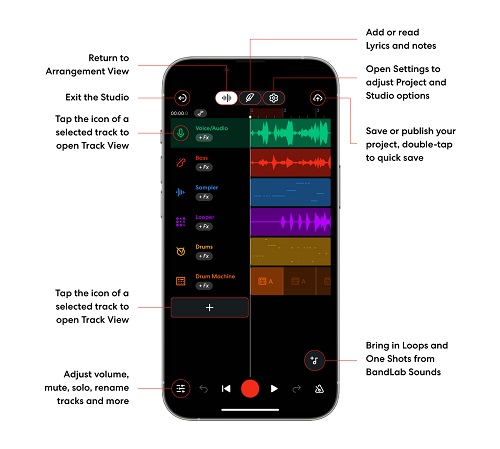
Part 5. How to Sync Tempo with YouTube Beats in BandLab
One of the biggest challenges when importing a beat from YouTube is making sure it aligns perfectly with BandLab's metronome. If the project BPM (Beats Per Minute) doesn't match the beat, any virtual drums or loops you add later will sound out of sync.
Follow these steps to sync the tempo:
Step 1 Find the Beat's Original Tempo
If you know the BPM of the beat, use that value. Many beats or type beats on YouTube mention the tempo in the title or description. If the BPM is not listed, you can estimate it using a BPM tap tool or BandLab's tempo detection features.
Step 2 Set the Project BPM
Enter the BPM of the beat so the project grid matches the track's rhythm. For example, if the beat is 90 BPM, set the project tempo to 90.
Step 3 Enable Snap to Grid
Turn on Snap to Grid in the settings. This ensures audio regions and edits align with the timeline grid, making slicing and looping more precise.
Step 4 Test the Alignment
Play the project and listen to the beat. The rhythm should align with the grid and any additional tracks. If timing feels off, slightly adjust the BPM until it matches the beat's natural flow.
Part 6. How to Save, Export, and Share Your Final BandLab Project
After you finish editing your project in BandLab, you can save it, export it as an audio file, and share it with others. BandLab is a cloud-based platform, so your progress is saved online, but you will need to "mixdown" the project to get a playable audio file.
How to Save Your YouTube BandLab Projects
On Web
Step 1. Look at the Save icon at the top right of the New Project interface, click the Save icon, and it will take several seconds to upload it to the Cloud.

Step 2. Click the Exit icon to head back to the BandLab Home page. It will automatically load to the Library window, where you can find all your projects listed.

On Mobile
Step 1. Tap on the Cloud icon at the top right of your screen.
Step 2. Hit the Save option in the appearing selection. Also, you can edit the title, description, and tags on BandLab.
Step 3. Head back to the Library, and you can check the project you saved.

How to Export Your YouTube BandLab Projects
To get a file you can play on your phone or upload to social media, you must "Export" or "Download" the mixdown.
Step 1. Open the BandLab project.
Step 2. Export the final song.
- On Web: Click the upper-left menu > Project > Download > Mixdown As. and select WAV or MP3.
- On Mobile: Tap the three dots on your project, select Download, and choose Audio.
Step 3. BandLab will process the export and generate a file you can download to your device.
How to Share Your YouTube BandLab Projects
You can share your BandLab projects in two ways: publish them to the BandLab community or send a private revision link to your friends.
Way 1. Publish to the BandLab Community
Step 1. Click Publish on the project page.
Step 2. Add a description, genre tags, and a custom cover image.
Way 2. Share a Private Revision Link
If you aren't ready to go public but want a friend's opinion, sharing a private link is a better option.
Step 1. Open your project.
Step 2. Click Share. Select the option to generate a private revision link.
Step 3. Copy the link.
Step 4. Send it to your friends so they can listen or provide feedback.
Conclusion
In this guide, we explored how to import music from YouTube to BandLab on desktop and mobile. Using ViWizard YouTube Music Converter, you can download and convert YouTube tracks into BandLab compatible formats. After you get the YouTube audio material, you can sync tempo, edit, export, and share your BandLab projects. Now, start experimenting and build your next track.
You May Be Interested


From new releases to old favorites, Matt Smith is always on the lookout for good music. He follows the latest in digital entertainment and shares songs and media he thinks are worth checking out.

Leave a Comment (0)