


Tesla in 2019 introduced its new 10.0 version for its in-car software, which lets you play Spotify on Tesla. Good news for every Tesla owner. Since Spotify is a leading music streaming platform with a galore of music tracks, integrating Spotify directly on the Tesla car makes it easier for the driver to listen to their favorite songs whenever they want to.
However, you can play Spotify on Tesla only if you have the 10.0 version for the in-car software, which means all the older models won't be able to link Spotify to their cars if you have an older version, no need to worry because we have the perfect solution for you. Whether you want to listen to Spotify songs directly on the Tesla or have an older version and want to know how you can do it, keep reading because we will share both solutions.
Part 1. How to Play Spotify on Tesla Using the Built-in Spotify App
If your Tesla supports Spotify integration, this is the most convenient way to use Spotify in your car. You do not need to connect your phone every time because Spotify runs directly through Tesla's touchscreen. Simply open the Music section, select Spotify, and sign in with your Spotify account. Technically, Tesla's Spotify app works like Spotify on another connected device. The Tesla infotainment system connects to Spotify's servers through an internet connection, loads your account information, and streams music directly through the car's speakers. Your phone is mainly used for logging in rather than playing the music.
This method provides the most seamless experience. You can browse playlists, albums, liked songs, and recommendations directly from the Tesla display. It is the best option if you have a compatible Tesla model and want Spotify fully integrated into your car. However, availability depends on your Tesla model and region. Spotify is currently supported on Tesla Model 3, Model S, Model X, and Model Y in available markets. Spotify also notes that "a data plan may be required depending on your Tesla model and/or country, and a Spotify Premium Account is required."
- Supported Tesla Models: Tesla Model 3, Model S, Model X, or Model Y with Spotify integration.
- Available Regions: Spotify integration is available in select countries and regions, including the USA, Canada, Mexico, Europe, Turkey, Australia, New Zealand, Taiwan, Hong Kong, United Arab Emirates, and Jordan.
- An Internet Connection: Required to stream Spotify through Tesla.
- A Spotify Account: Required to sign in. A Spotify Premium account may be required depending on your Tesla model and region.
Step 1Connect Spotify to Tesla
01Open the Spotify app from the Tesla touchscreen.
02Tap the Account tab.
03Scan the QR code shown on the Tesla screen with your phone.
04Follow the instructions on your phone to sign in to your Spotify account.
05Return to the Tesla touchscreen after your account is connected.
06Browse your playlists, albums, songs, or podcasts from the Spotify menu.

07Tap a song or playlist to start playing Spotify through Tesla's sound system.
08Use the touchscreen or steering wheel controls to pause, skip tracks, or adjust the volume.
Step 2Stream Spotify on Tesla
01Make sure your Tesla is connected to the internet through a data plan, Premium Connectivity, or Wi-Fi.
02Open the Spotify app from the Tesla touchscreen.
03Select a playlist, album, song, or podcast.
04Tap the content you want to play.
05Tesla will stream the music directly through the vehicle's speakers.
06Use the touchscreen or steering wheel controls to control playback.
Part 2. How to Play Spotify on Tesla Through Bluetooth
If your Tesla does not support the built-in Spotify app, or you prefer using your phone, Bluetooth is the easiest alternative. It works with almost any Tesla model and does not require Tesla's Spotify integration. The setup is simple: pair your phone with Tesla through Bluetooth, open Spotify on your phone, and start playing music. Your phone streams music from Spotify, sends the audio wirelessly through Bluetooth, and Tesla plays it through the car speakers.
The main advantage is that Bluetooth works with both Spotify Free and Premium accounts, and you can keep using the Spotify app you already know. The downside is that Spotify controls are limited on the Tesla screen, so you still need your phone for browsing and searching. For many Tesla owners, Bluetooth is a simple and reliable way to play Spotify without extra setup.
- A Tesla with Bluetooth Support: Required for audio playback from your phone.
- A Smartphone with the Spotify App: Your phone runs Spotify and sends audio to Tesla.
- A Spotify Account: Both Spotify Free and Premium accounts work.
01Open Controls on your Tesla touchscreen.
02Select Bluetooth.
03Tap Add New Device.
04Open Bluetooth settings on your phone.
05Select your Tesla from the available devices.
06Confirm the pairing request on both your phone and Tesla screen.
07Open the Spotify app on your phone.

08Select a song, playlist, album, or podcast.
09Tap Play and listen to Spotify through Tesla's speakers.
10Use your phone or Tesla controls to pause, skip tracks, or adjust volume.
Part 3. How to Play Spotify on Tesla from a USB Drive
Using a USB drive is another option, but it works differently from streaming Spotify. Tesla can play music files from USB, but it cannot play Spotify downloads directly. The basic process is to convert Spotify songs into standard audio files, transfer them to a USB drive, and then play them through Tesla's Media Player. Tools like ViWizard Spotify Music Converter can convert Spotify tracks into formats such as MP3 while preserving song details like titles, artists, albums, and cover artwork.
After conversion, the files work like regular music stored on a USB drive. Tesla does not need to connect to Spotify, your phone does not need to stay connected, and playback does not depend on an internet connection. This makes USB useful for long trips, areas with weak connectivity, or anyone who prefers an offline music collection.
- A Tesla with USB Media Playback Support: Required to play local music files.
- A USB Drive with Compatible Audio Files: Such as MP3 files.
- Converted Spotify Songs: Use ViWizard Spotify Music Converter to convert Spotify songs into compatible formats before transferring them to USB.

Key Features of ViWizard Spotify Music Converter
Free Trial Free Trial* Security verified. 5, 481,347 people have downloaded it.
- Convert Spotify songs, playlists, albums, podcasts, and audiobooks
- Export Spotify music in 6 formats for different devices and players
- Support Spotify Premium and free accounts for music conversion
- Preserve music metadata when organizing converted collections
- Batch download Spotify playlists and large music libraries
Step 1Convert Spotify Songs to MP3
 Step 1: Install ViWizard Spotify Music Converter
Start by downloading and installing ViWizard Spotify Music Converter on your Windows or Mac computer. Open the program and log in with your Spotify account. Both Free and Premium Spotify accounts are supported, so you can use your existing Spotify account without changing your subscription plan. With built-in Spotify integration, you can search for songs, playlists, and albums directly in ViWizard before converting them for Tesla playback.
 Step 2: Add Spotify Songs or Playlists
Find the Spotify songs, playlists, or albums you want to play in your Tesla, or copy and paste a Spotify link into ViWizard. The program will load the selected tracks automatically. You can choose individual songs, complete playlists, or full albums depending on the music you want to save and play offline in your car.
 Step 3: Select MP3 as the Output Format
Open the settings and choose MP3 as the output format. MP3 is a practical choice for Tesla USB playback because it is widely supported and can be easily transferred to a USB drive. You can also adjust audio quality, output folder location, and file organization settings before conversion.
 Step 4: Convert Spotify Music and Transfer Files to USB Drive
Click the Convert button to convert Spotify songs into local MP3 files. Once the conversion is complete, open the output folder and check your converted music files. Since the songs are saved as regular audio files instead of Spotify-protected downloads, you can transfer them to a USB drive and play them through Tesla's built-in Media Player without needing Spotify, a phone connection, or an internet connection.
Step 2Play Spotify Songs from USB Drive
01Transfer the converted music files to a USB drive.
02Insert the USB drive into a supported Tesla USB port.
03Open Media Player on the Tesla touchscreen.
04Select USB as the music source.
05Choose the folder containing your music files.
06Select a song to start playback.
07Use the Tesla touchscreen or steering wheel controls to pause, skip tracks, or adjust volume.
Part 4. How to Fix Spotify Not Working on Tesla
If Spotify is not working on your Tesla, the problem may come from a temporary app error, connection issue, outdated software, or a problem linking your Spotify account. You can usually fix it by restarting your Tesla, updating the software, reconnecting Spotify, or checking your internet connection. If the built-in Spotify app still does not work, you can use Bluetooth to play Spotify from your phone instead.
Step 1Check If Spotify or Tesla Is Experiencing a Service Issue
Before changing any settings, check whether other Tesla owners are reporting the same Spotify problem. If many users experience issues like "Playback Error", "License Error", or songs stopping after a few seconds, the issue may come from Tesla's Spotify integration or a temporary service problem.
Step 2Restart Your Tesla Touchscreen
Restart your Tesla infotainment system to refresh the Spotify app. Put your vehicle in Park, then press and hold both steering wheel scroll buttons until the touchscreen restarts. After the reboot, open Spotify again and check if playback works.
Step 3Update Tesla Software
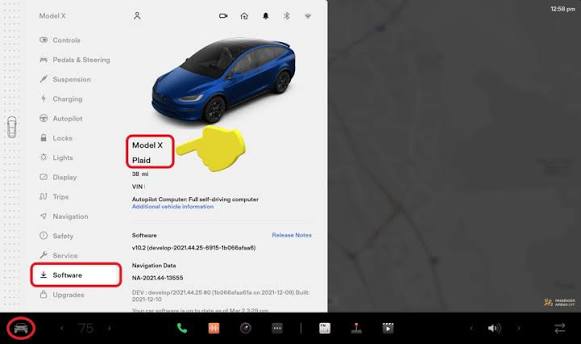
Open the Tesla touchscreen, go to Controls > Software, and check for available updates. Tesla software updates may include fixes for media and connectivity issues. Install the latest update, then try Spotify again.
Step 4Relink Your Spotify Account
If Spotify still does not work, reconnect your account. Open Spotify in your Tesla, log out, and scan the QR code to sign in again. If needed, remove Tesla from your Spotify connected apps and reconnect it.
Step 5Check Your Internet Connection
The Tesla Spotify app requires an active internet connection to stream music. Check whether other online features work properly. If your vehicle has a weak connection, wait until the signal improves and try Spotify again.
Step 6Use Bluetooth as a Workaround
If the built-in Spotify app continues to fail, play Spotify from your phone through Bluetooth. Connect your phone to Tesla's Bluetooth system, open Spotify, and stream music normally without using the Tesla Spotify app.
Step 7Contact Tesla or Spotify Support
If Spotify still does not work after updating software, restarting the system, and reconnecting your account, the issue may require a fix from Tesla or Spotify. Contact support if the problem continues or affects multiple Tesla owners.
Part 5. Final Thoughts
If your Tesla supports it, the built-in Spotify app offers the most seamless experience with direct access from the touchscreen. If you want a simple solution that works across Tesla models, Bluetooth is the easiest choice and lets you continue using Spotify from your phone.
If you want offline playback and more control over your music collection, USB is a practical option. It requires converting Spotify songs into regular audio files first, but it lets you enjoy your favorite music without relying on Spotify, your phone, or an internet connection. With tools like ViWizard Spotify Music Converter, you can convert Spotify songs into compatible audio files and manage your own offline music library more easily.
You May Be Interested

4 Ways to Play Apple Music in Tesla (Fixes Included)

5 Ways to Play YouTube Music on Tesla (Full Guide)

How to Use Tesla Tidal App Like A Pro [2026 Updated]

11 Ways to Play Spotify in Your Car (Step-by-Step)

What Is Spotify Car Thing? (with Best Alternatives)

How to Play Spotify in a BMW (5 Available Methods)

Adam Gorden is always looking for new ways to explore music and videos. He likes trying different media tools and learning how to manage audio and video files with ease.

Leave a Comment (0)