


With so many music streaming services available today, choosing the right one is not always easy. Spotify and Apple Music have long been major names in the streaming space, but YouTube Music offers a different experience by combining music streaming with YouTube's massive content library. It brings together songs, music videos, live performances, covers, remixes, and other unique content in one place.
Spotify remains one of the most popular music platforms worldwide, known for personalized recommendations, curated playlists, and a smooth listening experience. YouTube Music takes a different approach by using YouTube's wider ecosystem to offer more than traditional releases, including alternative versions, live recordings, and hard-to-find content.
So, which one should you choose? This guide compares Spotify and YouTube Music across key areas, including music libraries, user experience, discovery features, audio quality, pricing, device support, and unique features to help you find the better fit.
Part 1. Spotify vs YouTube Music: Overview
Spotify and YouTube Music are two leading music streaming services with different strengths. Spotify focuses on personalized music streaming, while YouTube Music combines streaming with YouTube's wider content library.
What Is Spotify?

Spotify is a digital audio streaming platform that offers music, podcasts, audiobooks, and other audio content from creators worldwide. Founded in 2006 and launched in 2008, Spotify has grown into one of the largest streaming services, serving more than 760 million monthly active users, including over 290 million Premium subscribers, across 184 markets. Its library includes over 100 million tracks, around 7 million podcast titles, and more than 700,000 audiobooks.
Unlike traditional music players, Spotify mainly works through streaming apps and its web player. It offers a free ad-supported plan and Premium subscriptions with features such as offline listening, unlimited playback control, and higher-quality audio options. Spotify has also expanded with AI-powered discovery, personalized listening, and new audio features.
Spotify is available on smartphones, computers, tablets, smart speakers, TVs, cars, and other connected devices. With Spotify Connect, users can easily control playback and switch between compatible devices.
What Is YouTube Music?

YouTube Music is a music streaming service developed by Google under the YouTube brand. It combines music streaming with YouTube's wider video ecosystem, offering official songs, albums, music videos, live performances, covers, remixes, and other music content.
Its biggest advantage is access to YouTube's massive content library, including live recordings, alternative versions, fan uploads, and videos that may not be available on other platforms. YouTube Music Premium adds features such as ad-free listening, background playback, and offline downloads.
Part 2. Spotify vs YouTube Music: Key Differences
Both services offer large music libraries, but they differ in areas such as music discovery, content options, audio quality, pricing, and device support. A closer comparison shows where each platform fits different listening habits.
01Spotify vs YouTube Music: Music Library and Content Availability
Spotify and YouTube Music both offer massive music catalogs, but they follow different content strategies. Spotify is mainly an audio streaming platform, offering over 100 million tracks, around 7 million podcast titles, and more than 700,000 audiobooks in supported markets. Its library focuses on official releases from artists and record labels, with a structured catalog built around songs, albums, artist pages, playlists, podcasts, and audiobooks. For users who mainly listen to official releases and prefer a traditional streaming experience, Spotify offers a cleaner and more organized catalog.
YouTube Music also provides over 100 million official songs, but its main advantage is its connection with YouTube's wider content ecosystem. Besides official tracks, users can access music videos, live performances, concert recordings, covers, remixes, acoustic versions, and other hard-to-find content. This makes YouTube Music better for discovering alternative versions or rare performances that may not appear on traditional streaming services. However, its catalog can feel less standardized because it combines official releases with broader YouTube content.
Overall, Spotify focuses on a structured music experience with organized audio content, while YouTube Music combines music streaming with YouTube's wider content library. Spotify is better for focused listening, while YouTube Music offers broader content discovery.
02Spotify vs YouTube Music: User Experience and Interface
Spotify and YouTube Music both provide smooth listening experiences, but they are designed around different user habits. Spotify feels like a personalized music app that learns your preferences, while YouTube Music feels like YouTube combined with a streaming service.
Spotify focuses heavily on personalized discovery, with a homepage built around recently played content, recommended albums, artist suggestions, and playlists such as Discover Weekly, Daily Mixes, and Release Radar. Instead of searching for music manually, users can rely on Spotify's recommendations based on their listening habits.

YouTube Music takes a more search-driven approach. By connecting with YouTube, it allows users to search by song titles, artists, lyrics, or keywords while discovering official tracks alongside live performances, covers, and remixes.

03Spotify vs YouTube Music: Music Discovery, Personalized Playlists, and Recommendations
Both platforms use machine learning to personalize recommendations, but Spotify has made music discovery one of its strongest features. It analyzes listening history, saved songs, skips, playlists, and favorite artists to create personalized experiences such as Discover Weekly, Release Radar, and Daily Mixes. Spotify also continues expanding AI-powered features, including AI DJ, which creates a personalized radio-style experience with AI-generated commentary in supported markets.
YouTube Music also provides personalized recommendations through Google's recommendation system, but its strength lies in content variety. Since it is connected to YouTube, it can recommend not only official releases but also live performances, covers, remixes, acoustic versions, and other unique content.
In practice, Spotify is better at suggesting music based on your listening habits, while YouTube Music is better for exploring different versions and discovering content beyond traditional streaming catalogs. Overall, Spotify offers the stronger recommendation system, while YouTube Music provides a broader discovery experience.
04Spotify vs YouTube Music: Lossless Streaming and Sound Features
Spotify and YouTube Music take different approaches to audio quality. Spotify has introduced lossless audio streaming for eligible Premium users in supported markets, using the FLAC format with support up to 24-bit/44.1 kHz audio. For listeners with quality headphones or audio equipment, Spotify Lossless can provide more detail, clearer instrument separation, and a more immersive listening experience.
YouTube Music does not currently offer a dedicated lossless audio tier. Instead, it provides adjustable quality settings, including Low, Normal, and High, focusing more on data control. While it is enough for casual listening, it does not offer the same high-fidelity option as Spotify.
05Spotify vs YouTube Music: Device and Platform Support
Both Spotify and YouTube Music support major platforms, including smartphones, computers, web browsers, smart TVs, smart speakers, and connected devices. However, Spotify has an advantage in overall device ecosystem support. It works across Windows, macOS, iOS, Android, gaming consoles, cars, wearables, and a wide range of third-party audio systems.
Its Spotify Connect feature lets users control playback from their phones, tablets, or computers and move between supported devices via Wi-Fi without relying on Bluetooth.
YouTube Music works best within the Google ecosystem. It supports Android, iOS, web browsers, smart TVs, Chromecast-compatible devices, Google Assistant devices, and smart speakers, making it a natural fit for users who already use products such as Android phones, Google Nest speakers, or Chromecast.
In real-world use, Spotify is better suited for users with a mixed device setup or those who frequently switch between platforms, while YouTube Music is a better match for users already invested in Google's ecosystem.
06Spotify vs YouTube Music: Pricing and Plans
Spotify and YouTube Music both offer free ad-supported plans and paid subscriptions. Spotify focuses mainly on music streaming, while YouTube Music adds value through its connection with YouTube Premium.
Spotify and YouTube Music both offer free ad-supported plans and paid subscriptions. Spotify focuses mainly on music streaming, while YouTube Music adds extra value through its connection with YouTube Premium.
Spotify Plans:
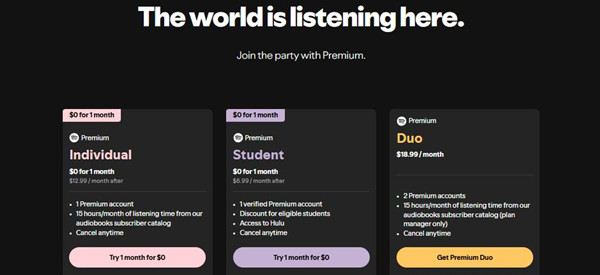
| Plan | Price (US) |
| Individual | $11.99/month |
| Duo (2 users) | $16.99/month |
| Family (up to 6 users) | $19.99/month |
| Student | $5.99/month |
| Free Plan | Free (with ads) |
Note:
- Free users can listen with ads and limited features.
YouTube Music Plans:

| Plan | Price (US) |
| Individual | $11.99/month |
| Family (up to 6 users) | $18.99/month |
| Student | $5.99/month |
| Free Plan | Free (with ads) |
Notes:
- YouTube Music Premium is included with YouTube Premium.
- Free users can listen with ads and limited features.
07Spotify vs YouTube Music: Unique Features
Spotify Features:
- AI DJ for personalized radio-style listening
- Spotify Wrapped for yearly listening insights
- Spotify Connect for seamless playback across devices
- Jam for real-time group listening
- Blend for shared playlists based on music tastes
YouTube Music Features:
- Music Videos and Live Performances from YouTube's library
- Audio and Video Switching between songs and videos
- Samples for discovering new music through short clips
- Covers and Remixes from YouTube content
- Lyrics Translation for supported songs
Overall, Spotify is better for personalized features and social listening, while YouTube Music stands out for music discovery and access to unique video-based content.
Part 3. Spotify vs YouTube Music: Which One Should You Choose?
Spotify and YouTube Music are designed for different types of listeners. Spotify is better for personalized playlists and organized listening, while YouTube Music is stronger for videos, live content, and wider discovery.
| Feature | Spotify | YouTube Music |
|---|---|---|
| Free Option | Free plan with ads | Free plan with ads |
| Premium Pricing | $11.99/month (Individual) $19.99/month (Family) $5.99/month (Student) |
$11.99/month (Individual) $18.99/month (Family) $5.99/month (Student) |
| Music Library | 100+ million tracks, podcasts, and audiobooks | 100+ million songs plus YouTube music content |
| Music Discovery | Personalized playlists, Discover Weekly, Daily Mixes | Personalized recommendations, music videos, and YouTube content |
| Offline Listening | Yes (Premium required) | Yes (Premium required) |
| Supported Devices | iOS, Android, Windows, Mac, web, smart devices, cars, consoles | iOS, Android, web, smart TVs, Chromecast, Google devices |
| Sound Quality | Lossless audio for eligible Premium users | Adjustable quality settings for streaming |
| Music Content | Songs, albums, playlists, podcasts, audiobooks | Songs, albums, playlists, videos, live performances, covers |
| Unique Features | AI DJ, Spotify Wrapped, Spotify Connect, Jam | Music videos, audio/video switching, YouTube integration |
| Free Trial | Varies by offer | Varies by offer |
When Spotify is Better:
Spotify is a better choice for users who want a more personalized and organized music experience. Its recommendation features, including Discover Weekly, Daily Mixes, and curated playlists, learn from your listening habits and help you discover new music with less effort. Spotify is also more convenient for users who switch between different devices, thanks to Spotify Connect, which makes playback control simple across phones, computers, smart speakers, cars, and gaming consoles. Even on the free plan, Spotify offers a flexible listening experience with useful playback options.
When YouTube Music is Better:
YouTube Music is a better choice if you already use Google services or enjoy discovering different types of music content. Its integration with Google Assistant, Chromecast, and Android devices makes it easy to play music across your everyday devices. More importantly, YouTube Music goes beyond traditional streaming by combining songs with music videos, live performances, covers, remixes, and other unique content. This gives users more ways to explore music and find versions that may not be available on other platforms.
Part 4. How to Transfer Between Spotify and YouTube Music
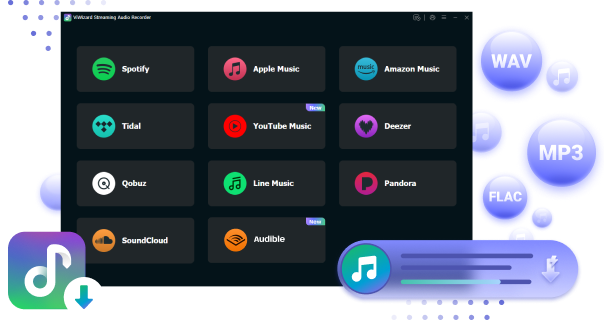
Switching between Spotify and YouTube Music does not require rebuilding your library from scratch. Since both platforms support local music uploads, you can also use ViWizard Streaming Audio Recorder to save songs as local audio files and move them between services more freely.
ViWizard can convert music from Spotify, YouTube Music, and other streaming platforms, then save tracks as common audio formats while keeping important details such as song titles, artist names, and album information. After saving the songs locally, you can upload them to Spotify or YouTube Music's local files feature and continue listening without depending on the original platform.
This approach gives you more control over your music collection. Instead of simply transferring playlists, you can keep a personal copy of your favorite tracks and move them between supported music apps whenever your listening preferences change.
Learn how to transfer Spotify playlists to YouTube Music with tools like TuneMyMusic, Soundiiz, and FreeYourMusic, plus move music between both platforms with converters and local files.
You May Be Interested


Adam Gorden, the digital media specialist at ViWizard, is dedicated to providing the best solutions for digital media management, including audio and video conversion, file optimization, and media workflow enhancements.

Leave a Comment (0)