


If you use Linux, you may already know that some apps available on Windows and Mac are not always supported on Linux. Music streaming services are a common example. While TIDAL provides official desktop apps for Windows and macOS, Linux users do not have the same native app experience.
TIDAL does not provide an official native desktop app for Linux. Currently, the official way to use TIDAL on Linux is through the TIDAL Web Player, which allows users to stream music directly from a supported browser. For users who want a more customized setup, there are other options to explore, including unofficial desktop apps, TIDAL CLI clients, Strawberry Music Player, and local media players.
In this guide, we will explain how each method works and help you choose the best way to use TIDAL on Linux based on your needs, whether you want simple streaming, better desktop integration, advanced control, or offline access.
Part 1. Is There a TIDAL App for Linux?
Unfortunately, TIDAL does not provide an official Linux desktop app. According to TIDAL's supported devices, its desktop app is available for Windows and macOS, while Linux is not supported. This means Linux users cannot install a native TIDAL application like users on other desktop platforms.
TIDAL Connect also does not allow users to run TIDAL directly on Linux. It is designed to stream music from the TIDAL app to supported audio devices over a network, not turn a Linux computer into an official TIDAL app. Instead, Linux users need to rely on alternative ways to access TIDAL, such as the TIDAL Web Player, unofficial desktop clients, or local music playback solutions, depending on their needs.
Part 2. How to Use TIDAL on Linux with the TIDAL Web Player
The TIDAL Web Player is the simplest and most official way to use TIDAL on Linux because it requires no additional installation. Since TIDAL does not provide an official Linux desktop app, the web player serves as the main option for accessing your account, streaming music, and managing your library through a browser. It works with modern browsers such as Chrome, Chromium, and Firefox by loading TIDAL's web interface and connecting directly to its streaming service. After signing in, users can search for music, play albums and playlists, access recommendations, view lyrics, and manage saved tracks.
However, because it runs in a browser, it lacks some features available in official desktop apps, such as offline downloads and deeper system integration. Playback quality may also depend on browser support, system settings, and audio configuration. For most users, the TIDAL Web Player remains the most reliable starting point because it provides official access with minimal setup.
Requirements
- An active TIDAL account
- A supported browser such as Chrome, Chromium, or Firefox
- A stable internet connection
- A Linux computer with working audio output
Steps to Use TIDAL Web Player on Linux
01Open a web browser on your Linux computer, such as Chrome, Chromium, or Firefox.
02Go to the official TIDAL Web Player: https://listen.tidal.com.
03Click on Log in in the upper-right corner.
04Enter your TIDAL account email and password.
05Browse your library or use the Search option to find songs, albums, artists, or playlists.

06Click on a track, album, or playlist to start streaming.
Part 3. How to Use TIDAL on Linux with Unofficial Desktop Apps
Unofficial TIDAL desktop apps are designed for users who want a more native Linux experience. Since there is no official TIDAL application for Linux, community developers have created desktop clients that package the TIDAL web interface into standalone applications. These apps typically use technologies such as Electron or Chromium Embedded Framework to create a dedicated window that loads TIDAL while adding desktop-level features.
A community client such as TIDAL HiFi follows this approach by providing a more integrated TIDAL experience for Linux users. Depending on the project, these clients may offer features such as application shortcuts, system tray support, media key controls, and improved desktop integration. The advantage is a smoother workflow because TIDAL can be launched like a regular Linux application instead of a browser tab. However, these clients are not officially supported by TIDAL and depend on its website and authentication system, so platform updates may affect compatibility.
Requirements
- An active TIDAL account
- A compatible Linux system
- An unofficial TIDAL desktop client
- Required app dependencies
- An internet connection
Steps to Install TIDAL Hi-Fi on Linux
01Go to the TIDAL Hi-Fi GitHub repository.
02Open the Releases section.
03Download the Linux package that matches your system, such as a .deb package for Debian/Ubuntu-based systems, .rpm package for RPM-based systems, or AppImage.
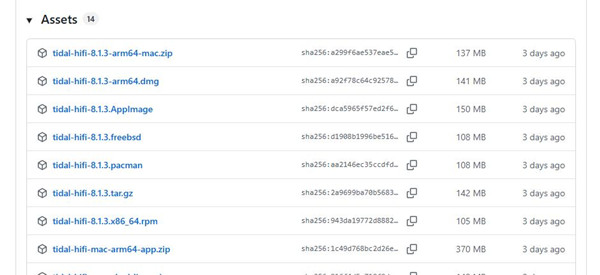
04Install the downloaded package using your Linux package manager or the provided installation method.
05Install required dependencies, such as libnotify, dunst, or another notification service, if needed.
06Open your application launcher and search for TIDAL Hi-Fi.
07Launch the app and sign in with your TIDAL account.
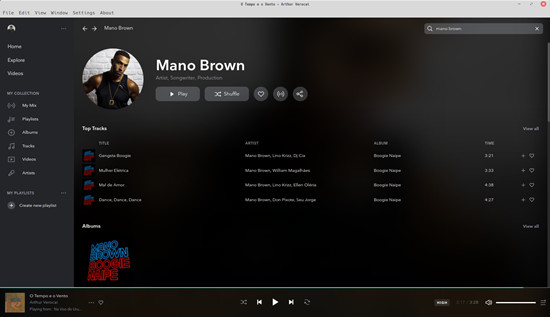
08Search for music and start streaming.
Read More: How to Install and Use Tidal-HiFi (GitHub) on Linux
Part 4. How to Use TIDAL on Linux with a TIDAL CLI Client (No Longer Work)
A TIDAL CLI client was once an option for Linux users who preferred terminal-based workflows. These tools allowed users to search music, interact with TIDAL through commands, and send audio output through Linux audio systems such as PipeWire, PulseAudio, or ALSA.
Most CLI clients relied on community-built integrations or unofficial API access to connect with TIDAL services. However, as TIDAL changed its API structure and authentication system, many older CLI solutions stopped working or became difficult to maintain. Without updates to support TIDAL's newer access requirements, these tools are now unreliable for most users and are no longer a practical option.
Part 5. How to Play TIDAL Music on Linux with Strawberry Music Player
Strawberry Music Player provides a more traditional desktop music experience for Linux users who prefer managing music through a dedicated application. It can connect supported online music services with the Linux audio environment, allowing users to manage streaming content alongside local music files.
This approach is useful for users who maintain personal music libraries, use external DACs, or want more control over their Linux audio setup. However, because TIDAL does not officially support Linux applications, available features depend on current integrations and may not fully match the experience provided by official TIDAL apps on Windows or macOS.
Requirements
- An active TIDAL account
- A compatible Linux system
- An unofficial TIDAL desktop client
- Required app dependencies
- An internet connection
Steps to Connect TIDAL with Strawberry Music Player
01Install the latest version of Strawberry Music Player on your Linux computer.
02Open Strawberry Music Player.

03Go to Tools > Configuration.
04Select the Tidal section.
05Enable the TIDAL integration option.
06Select Use OAuth if available.
07Enter the required authentication information.
08Click Login to connect your TIDAL account.
09Browse your TIDAL library and start playing music.

Read More: How to Get Tidal on Strawberry Music Player (Step-by-Step)
Part 6. How to Play TIDAL Music on Linux with a Local Media Player
Another practical way to use TIDAL music on Linux is to prepare TIDAL music files on Windows or Mac first and then play them through a local Linux media player. Instead of streaming TIDAL directly on Linux, users can use a tool such as ViWizard TIDAL Music Converter to prepare music files and transfer them to Linux for playback with applications such as VLC, Strawberry, Rhythmbox, or Audacious.
ViWizard TIDAL Music Converter allows TIDAL subscribers to convert TIDAL songs, albums, playlists, artists, and podcasts into common formats such as MP3, WAV, FLAC, AIFF, and M4A while preserving metadata. For users who want a listening experience closer to the TIDAL desktop app, it can also help retain high-quality audio when available. Once converted, music files can be transferred to Linux through a USB drive, cloud storage, or other file transfer methods.
The main benefit of this approach is flexibility. Once music is stored locally, Linux no longer needs direct TIDAL support, allowing users to organize tracks, create playlists, and listen offline with their preferred media player. This method is especially useful for users who want offline access, use Linux systems with limited TIDAL support, or prefer local music management over streaming.
Requirements
- An active TIDAL subscription
- A Windows or Mac computer
- ViWizard TIDAL Music Converter
- Enough storage space for music files
- A Linux media player
- A way to transfer files to Linux

Key Features of ViWizard TIDAL Music Converter
Free Trial Free Trial* Security verified. 5, 481,347 people have downloaded it.
- Convert TIDAL songs, playlists, albums, artists, podcasts, and audiobooks
- Export TIDAL music in 6 formats for different devices and players
- Preserve Hi-Res FLAC and original audio quality
- Preserve Dolby Atmos audio and metadata during conversion
- Batch download TIDAL playlists, albums, and large music collections
 Step 1: Add TIDAL Tracks
Open ViWizard TIDAL Music Converter on your computer. The TIDAL app will automatically launch, and you'll need to sign in to your TIDAL account. Choose the tracks, playlists, or albums you'd like to download, and click the Add Music button in the bottom-right corner.
 Step 2: Set up the Output Preferences
Click the menu icon in the top-right corner and choose Preferences. In the pop-up window under the Conversion tab, you can configure the audio output format, sample rate, bit rate, and audio channel. Remember to convert the tracks into a format compatible with Linux, such as MP3 or FLAC. Once your settings are in place, click the OK button to save them.
 Step 3: Download and Convert TIDAL Tracks
After setting your preferences, click the Convert button in the bottom-right corner to begin downloading your selected tracks. When the process is finished, navigate to the conversion list where you can view all the converted TIDAL songs. Or, click the folder icon next to each title to check them in the output directory on your computer.
 Step 4: Play TIDAL Tracks on Linux
Lastly, transfer the downloaded TIDAL songs to your Linux computer. You can do this by uploading them to a cloud service, using a USB cable, sending them via email, or any other method. Once transferred, you can enjoy your TIDAL music collection on Linux without needing the TIDAL application.
Part 7. What Is the Best Way to Use TIDAL on Linux?
The best way to use TIDAL on Linux depends on your needs. The TIDAL Web Player is the easiest option for official streaming, while unofficial desktop apps provide a more app-like experience. CLI clients are no longer a practical choice due to TIDAL's API changes, and Linux music players such as Strawberry are better suited for users who want more control over their music library.
For offline playback and wider compatibility, creating a local music library is the most flexible solution. ViWizard TIDAL Music Converter can help save TIDAL songs, albums, playlists, artists, and podcasts as common audio files while preserving metadata and audio quality when available. After transferring the files to Linux, you can play them with almost any local media player without depending on TIDAL support. This makes it a practical option for users who want to combine TIDAL music with the flexibility of Linux.
You May Be Interested

What Is Tidaluna? How to Install and Use the TIDAL Desktop Mod

6 Effective Methods to Get Apple Music on Linux (Step-by-Step)

Does Spotify Work on Linux? Full Guide & Setup Methods

Deezer for Linux Guide: 4 Working Methods

6 Best Ways to Use Qobuz on Linux
4 Proven Ways to Use YouTube Music on Linux

Dave Henry loves movies and all things video. He likes checking out different video formats and trying new media players to see how they change the viewing experience.

Leave a Comment (0)