


Spotify is one of the most popular music streaming services, giving users access to music without limits. Millions of users choose Spotify for its large music library, simple interface, and algorithm-based playlists that adapt to listening habits. It feels modern and focused on helping users discover new music easily.
iHeartRadio takes a different approach. It focuses more on live radio and broadcast-style listening instead of on-demand music. It feels closer to traditional radio, where stations and scheduled programs guide what you hear, including music, talk shows, news, and sports.
Both platforms cover music and podcasts, but the listening experience is quite different. Spotify is more personalized and interactive, while iHeartRadio is more radio-based and passive.
This guide compares Spotify and iHeartRadio step by step, so you can better understand their differences and decide which one fits your listening style.
Part 1. Spotify vs iHeartRadio: Overview
Spotify and iHeartRadio offer very different ways to listen to music and audio content. Spotify focuses on on-demand streaming and personalization, while iHeartRadio is built around live radio and broadcast-style listening.
What Is Spotify?

Spotify is a music streaming service launched in 2008, founded in Sweden by Daniel Ek and Martin Lorentzon. It is one of the largest audio platforms in the world, with over 600 million monthly users and a library of over 100 million songs, plus podcasts and audiobooks.
It offers both free and Premium plans. Premium users can download music and listen without ads. Spotify is known for personalized playlists like Discover Weekly, which recommend music based on listening habits. In recent years, Spotify has also added more AI-based features to improve music discovery and playlist creation.
What Is iHeartRadio?
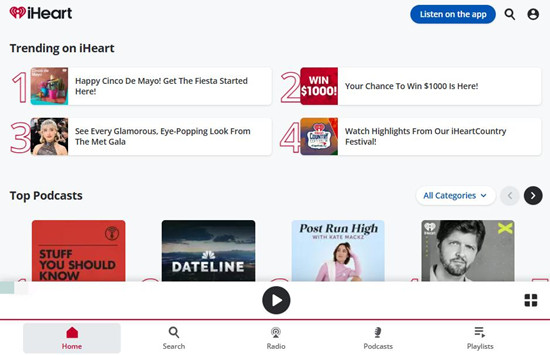
iHeartRadio is a U.S.-based digital audio platform launched in 2008 by iHeartMedia, and it remains especially popular in the United States. It is mainly built around live radio streaming instead of a large on-demand music library. It offers access to thousands of live AM and FM radio stations, plus podcasts and music stations.
iHeartRadio focuses on live and scheduled content such as music, talk shows, news, and sports, similar to traditional radio listening.
Part 2. Spotify vs iHeartRadio: Key Differences
Spotify and iHeartRadio differ in how they handle music, playlists, podcasts, and discovery. Spotify leans more toward personalization and algorithm-based recommendations, while iHeartRadio is centered on radio stations and curated programming.
Music Library
If you want access to almost anything you might want to hear, Spotify is the stronger option. It has over 100 million songs, plus a large podcast library and even audiobooks in some regions. In everyday use, it feels like a platform where you can search almost anything and usually find it, from mainstream hits to more niche tracks.
iHeartRadio is more limited. Its on-demand catalog is generally estimated at around 20 to 60 million songs depending on licensing. That is still enough for casual listening, but you will notice the gap when searching for deeper or less popular music. It focuses more on well-known songs and radio-friendly content rather than full music coverage.
User Experience
Spotify is built around personalization. The more you use it, the more it adapts to your taste. Features like Discover Weekly, Daily Mixes, and Release Radar update based on your listening habits. In daily use, it feels like the app is always suggesting new music that matches what you like.
On Premium, you get full on-demand control, meaning you can play almost any song anytime. This feels powerful for users who want full control, but the app can also feel busy since it mixes music, podcasts, and other content in one place. Overall, Spotify is designed around control—you decide what to play, when to play it, and how to organize it.
iHeartRadio feels more like traditional radio. You choose a station or artist channel, and music keeps playing automatically. It is more about passive listening instead of selecting every track.
In real use, this makes iHeartRadio feel simpler. You do not need to plan what is next, but you also have less control over specific songs compared to Spotify.
Offline Downloads
Spotify offers offline downloads with Premium. You can download songs, albums, or playlists and listen without internet. This is useful for travel or saving mobile data. Downloads stay inside the app and cannot be moved elsewhere, but they work smoothly once saved.
iHeartRadio also supports offline downloads, but only on paid plans like All Access. You can download selected songs and playlists, but the feature is more limited. Live radio is not fully available offline, so it is less flexible than Spotify.
Pricing
Spotify is more expensive but offers a more complete experience. In the U.S., Premium is usually around $12.99 per month. There are also Duo, Family, and Student plans for shared or discounted use. The higher price reflects its full on-demand system and large music library.
iHeartRadio is cheaper overall. It has a free ad-supported version, plus paid plans that usually range from about $5.99 to $12.99 per month. The lower cost matches its simpler, radio-based listening model.
Part 3. Spotify vs iHeartRadio: Feature Comparison
Spotify and iHeartRadio suit different listening habits. Spotify works best for users who want personalized music discovery and on-demand control, while iHeartRadio fits those who prefer live radio and traditional broadcast listening.
-

Unlimited Music vs. Limited On-Demand Control
Spotify is built around full on-demand listening, and once you start using it, it feels very direct and flexible. You can search for and play any song, album, or artist instantly without restrictions, especially on Premium. It also gives you unlimited playlist creation and full queue control, so you decide exactly what plays next and in what order. iHeartRadio does offer some on-demand listening, but it is more limited compared to Spotify, since most of the experience is based on radio-style streaming where you usually listen to stations or curated streams instead of picking every track yourself.
-
Podcasts + Music Hub vs. Live Radio Experience
Spotify works as a combined hub for music and podcasts, offering a large global podcast library with exclusive shows and making it easy to switch between music and spoken content within the same app, so everything feels like it sits in one place whether you are listening to an album or a podcast episode. iHeartRadio focuses more on live radio and broadcast content, streaming real FM and AM stations in real time, including music channels, news, talk shows, and sports, which creates a more traditional radio experience closer to simply turning on a radio rather than browsing an on-demand library.
-
Algorithm Playlists vs. Custom Artist Radio
Spotify uses strong personalization based on your listening habits, creating playlists like Discover Weekly, Daily Mix, and Release Radar that continue to update as your taste changes, which often makes it feel like the app is learning what you like over time. iHeartRadio keeps things simpler with its artist radio feature, where you pick an artist and it plays a continuous stream of similar music, giving you a more straightforward, themed radio station experience instead of personalized recommendations.
-
Social Features vs. Music-First Experience
Spotify also includes social features that make listening more interactive, letting you create collaborative playlists, share songs easily, and see what friends are listening to on desktop, which adds a social layer to the experience. iHeartRadio, on the other hand, is more focused on listening itself, with very limited social or sharing features and a simple approach that prioritizes delivering radio streams and audio content rather than building a social music environment.
Part 4. Spotify vs iHeartRadio: Which Should You Choose?
| Feature | Spotify | iHeartRadio |
|---|---|---|
| Monthly fee | $11.99/month (Premium Individual) | Free + paid plans (~$5–$13/month) |
| Free option | Yes, with ads | Yes, with ads |
| Free trial | 30 days | Varies by promotion |
| Music library | 100M+ songs + podcasts | Radio-based access + smaller on-demand library |
| Audio quality | Up to 320 kbps | Standard streaming quality |
| Family plan | Yes | No standard family plan |
| Student discount | Yes | Limited availability |
| Offline listening | Yes (Premium) | Limited (paid plans only) |
| Radio stations | No live radio | Yes, live FM/AM stations |
| Podcasts | Yes | Yes (strong talk radio focus) |
| Music videos | Limited | No |
| Social features | Playlists, sharing, Blend | Minimal |
| Devices | Phones, desktop, TV, consoles | Phones, web, smart speakers, cars |
| Discovery | Smart playlists | Artist radio stations |
Spotify Is Better If You:
Spotify is better if you want to actively choose what you listen to. You can search specific songs, build your own playlists, and get recommendations that match your taste. It fits users who like control and a more personalized music experience.
iHeartRadio Is Better If You:
iHeartRadio is better if you prefer a more passive listening style. You can turn on a station or channel and let it play without picking songs or managing playlists. It fits users who want simple, background listening with less effort.
Part 5. Conclusion
Spotify and iHeartRadio serve different listening needs. Spotify is built for on-demand music, strong personalization, and a large music library, making it a better fit if you want full control over what you play. iHeartRadio focuses more on live radio, talk shows, and broadcast-style listening, closer to a traditional radio experience.
In short, Spotify is better for active listening and music discovery, while iHeartRadio is better for live stations and passive listening.
If you use Spotify often, some users also look for more flexibility with their music. Tools like ViWizard Spotify Music Converter allow you to save songs, playlists, podcasts, and audiobooks as common audio formats such as MP3 for use on different devices. It works on Windows and Mac, where you select tracks, choose a format, and convert them for offline use beyond streaming.

Key Features of ViWizard Spotify Music Converter
Free Trial Free Trial* Security verified. 5, 481,347 people have downloaded it.
- Convert Spotify songs, playlists, albums, podcasts, and audiobooks
- Export Spotify music in 6 formats for different devices and players
- Support Spotify Premium and free accounts for music conversion
- Preserve music metadata when organizing converted collections
- Batch download Spotify playlists and large music libraries
You May Be Interested


Adam Gorden, the digital media specialist at ViWizard, is dedicated to providing the best solutions for digital media management, including audio and video conversion, file optimization, and media workflow enhancements.

Leave a Comment (0)